

Rheology

For further information about rheological provided by RaDes see our presentation with case studies:

 Melanie Köllmer, Co-Founder & Head of Formulation
melanie.koellmer@rades-development.com

Rational Design
We founded RaDes out of the conviction that topical products can be developed more effectively than has been the case so far. While creams, ointments, and gels are well-established dosage forms, they are often not fully understood. However, scientific and technical advances in our understanding of these dosage forms now make it possible to develop better products more efficiently.
Rational design is based on the idea that even complex topical semi-solids can be understood and developed systematically. This means that essential questions about a formulation can be answered, such as how it works, why a particular format or excipients were chosen. Also, how it reacts to changes, stress, and variability in processes and excipients, and how skin penetration is enhanced or the API is stabilized is better understood.
RaDes has developed this concept based on decades of industry experience and multiple learning cycles. We have laid out the concept in detail in a publication [1].
Like other dosage forms, topical products are not matters of art, but of science. Experience, pattern recognition, and manual dexterity are helpful additions to a structured, science-based approach. Topical formulation development is often a complex optimization challenge. Formulation platforms have proven unsuitable for solving such problems because they limit potential solutions. Rational formulation design is API-centric and formulations are tailor made to the individual molecule and target product profile.
This approach allows us to complete development projects with fewer experiments and iteration cycles, saving time and costs.
Rational Formulation Design opens up a world of opportunities in topical formulation development. This includes:
- Many difficult-to-formulate molecules can be systematically developed into safe and effective products.
- Existing molecules used by millions of patients can be formulated to be easier or more pleasant to use, thereby improving compliance and therapeutic outcomes.
- Often, current formulations are not optimized for delivery to the skin and use an unnecessarily high drug concentration. There is often potential to reduce the concentration. This can make products safer and more cost-effective, as well as reduce their environmental impact. In addition, this offers opportunities to generate IP.
Rational Desing is based on a thorough understanding what a topical pharmaceutical formulation really is.
1) A topical pharmaceutical formulation is a DRUG DELIVERY SYSTEM. It must deliver an active through the formidable barrier of the skin.
Key features to be known and optimized are:
- The SOLUBILITY of the active in the formulation. Solubility is single excipients is typically not predictive. Dilution and distribution processes in a formulation must be considered.
According to Fick’s First Law, the flux of an active across the skin is proportional to the concentration gradient. Since the concentration in the skin is zero, it is proportional to the concentration in the formulation. Increasing solubility can help improve penetration.
- Numerous studies have shown that the SATURATION of the active in a formulation is a major driving force for skin penetration (1,2). The higher the saturation, the higher the chemical potential and skin penetration. However, saturation must be balanced with product robustness: over-saturation during shelf life can cause reprecipitation which is a severe quality issue.

Tacrolimus shows higher penetration from more saturated creams. The Protopic® references is a low saturated ointment
- DISTRIBUTION: Topical formulations often have two or more phases, e.g. an oil and a water phase. Actives and excipients can be distributed between the phases. This may affect release and penetration. It can have a strong impact on the chemical stability of actives; the formulation of hydrolysis-prone actives can be enabled by trapping them in the oil phase (3). The efficacy of preservatives depends on the phase in which they are present (4).
- TRANSFORMATION upon application can change everything. Solubility, saturation, distribution can change impacting on release and penetration. It’s important to understand transformation processes and anticipate their impact.
2) A topical formulation is a PHYSICAL BODY: Semi-solids are “structured liquids”. At rest, they behave mostly like solids due to the inner structures built up by e.g. polymeric thickeners or liquid crystalline structures. This solid-like behavior at rest is very important for physical stability (e.g. against sedimentation) and bioavailability (residence time at the site of action). Under shear, the structures are destroyed (mostly reversibly) and behave more like liquids. This is important to make it spreadable, sprayable, pumpable, etc. Rheology is of great help in designing, analyzing and optimizing the physical properties of semi-solids.
3) Semi-solid topical pharmaceuticals are QUALITY PRODUCTS. They must meet extensive regulatory and quality requirements to be commercially viable. No quality, no approval, no patient benefit.
Quality requirements are often absolute, binary: meet or fail. This can be extremely costly and time-consuming if not considered early on. Therefore, it is critical to consider whether processes, excipients, methods, and controls are generally suitable to meet quality requirements.
For NCE projects, there is often great potential to develop better products faster, even before formulation begins, by selecting the right API. Since most molecules are not designed for topical delivery, selecting those with favorable developability properties increases the likelihood of success for topical projects while reducing time and costs. RaDes has developed a 35-mg approach to screening candidates for solubility/formulability, chemical stability, and skin penetration [2].
In a case study, reliable and discriminative developability data could be generated for 34 topical compound candidates with a maximum of 35 mg of substance per compound.
- The formulatability of the compounds was assessed based on their solubility in five solvents that are representative of different formulation approaches.
- After the solubility screening, the number could be reduced to 18
- Chemical stability was assessed by forced degradation studies
- At least some susceptibility to oxidation was seen for all compounds which can mostly be overcome. Stability at acidic pH, most critical for developability, was generally good
- Cutaneous bioavailability in viable skin was investigated at the side of action
- Relevant skin concentration in the order of magnitude of approved references was shown. A concrete target concentration was not yet established

Epidermal skin penetration of 19 test and 4 reference compounds from propylene glycol vehicle (cassette dosing study)
For 7 of the molecules, good technical developability can be assumed. Provided a comparable biological/toxicological profile, compounds from this group should be selected for further steps
A poster publication of this study is available under: RaDes Poster Skin Forum 2025_topical compound selection
The most prominent challenges in topical product development are i) penetration through the skin barrier (or eye for ophthalmic delivery), ii) poor solubility, particulary for new NCEs and iii) chemical stability of actives as they are typically dissolved in complex matrices.
Skin penetration can be improved by an appropriate understanding and design of the drug delivery as outlined above.
For solubilization of poorly soluble actives, rational design provides many options. As opposed to peroral drug delivery where aqueous solubility is essential, in topical drug delivery also other options of solubilization can be employed, most importantly oil solubility. Here, different types of oils can act synergistically to improve solubility. The addition of surfactants and more polar organic solvents and sophisticated engineering of their distribution within the formulation can further improve solubility.
An example for this is RaDes reformulation of mometasone furoate, a modern corticosteroid with superior risk-benefit profile that so far was only available in greasy, essentially, anhydrous formulations or alcoholic solutions. The reason for that was its unfavorable solubility profile. At RaDes, using our rational design approach, we managed to formulate this molecule in cosmetically attractive, patient-preferred formats of lotion (O/W emulsion), cream and foam. A European and an US patent have been granted for this innovation (5,6).
In topical formulations, the API is typically dissolved in complex matrices and can undergo many chemical reactions. This makes chemical stability an important challenge. Therefore, powerful analytical methods and expertise in chemical stabilization are critical to the success of a project. Insufficient analytical methods in the early stages of development can lead to project failure at later stages. RaDes scientists have a strong track record of successfully developing degradation-prone APIs. A public example is the stabilization of the strongly hydrolysis-prone tacrolimus in an aqueous cream (4). It was achieved through a combination of chemical stabilization and optimization of distribution of the API between the phases of the formulation. This highlights another characteristic of rational design of topicals: that formulation design and analytics go hand in hand in all phases of a project.
Rational design of topical improves the probability of success of topical program. The thorough understanding of formulations and use of predictive tools also enable more precise risk assessment.
Better hypotheses and a more targeted approach make it possible to gain more insights with fewer experiments, saving both time and money.
References:
- Herbig, M.E.; Evers, D.-H.; Gorissen, S.; Köllmer, M. Rational Design of Topical Semi-Solid Dosage Forms-How Far Are We? Pharmaceutics 2023, 15, 1822.
- Davis, A.F.; Hadgraft, J. Effect of supersaturation on membrane transport: 1. Hydrocortisone acetate. Int. J. Pharm. 1991, 76, 1–8.
- WO2019233722, Pharmaceutical Composition Comprising Tacrolimus.
- Puschmann, J.; Herbig, M.E.; Müller-Goymann, C.C. Correlation between free aqueous preservative concentration in emulsion gels measured by equilibrium dialysis and antimicrobial efficacy. J. Pharm. Biopharm.2018, 131, 152–161.
- EP4108235B1 Topical pharmaceutical formulation,
- US12447161B2 Topical pharmaceutical formulation

Michael Herbig, Co-Founder & CEO RaDes
michael.herbig@rades-development.com
Generics
Steareth-21, also called polyoxyethylene (21) stearyl ether, is a highly efficient and commonly used emulsifier in liquid and semisolid dosage forms. The name suggests it is a chemically well-defined compound. At RaDes, however, we have developed innovative analytical methods that demonstrate that it is a complex mixture with components ranging from steareth-3 to steareth-140. These subcomponents show relevant differences in solubility and HLB and, most importantly, their distribution is not controlled by pharmacopeial specifications and can vary between manufactures and, potentially, also between batches of one manufacturer.
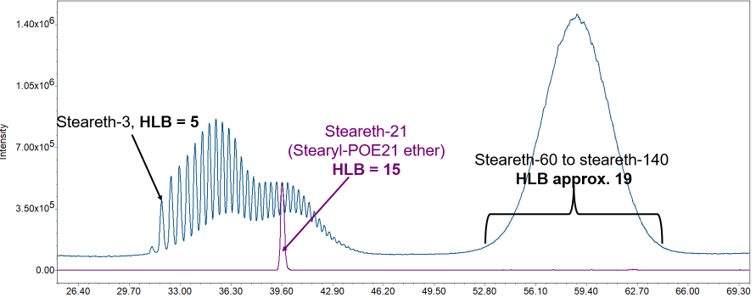
We have identified such (unexpected) complexity for a variety of excipients typically used in topicals. For details, see our presentation on Excipient Analytics & Reverse Engineering.
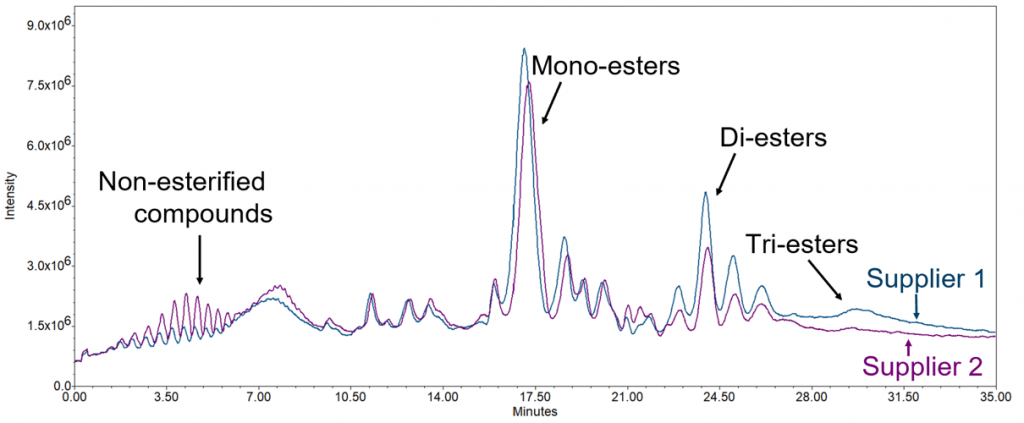
An excipient of know complexity is polysorbate 20. In a fusion of UPLC-MS analytics and stochastic modelling, we identified more than 20 000 components contained in this material. For more details, including variability between suppliers, see our publication (1).
For most generic development projects, the exact quantitative composition of the excipients is unknown. It must be determined through reverse engineering. Typically, both the FDA and the EMA require a precision of ±5% compared to the originator.
However, especially in topical semi-solids, complex excipients are frequently present. These are often mixtures of ten or more components that can vary between suppliers and sometimes between batches. Examples of complex excipients include surfactants, emulsifiers, mono-, di-, and triglycerides, and petrolatum (2, 3).
Analyzing such excipients cannot rely on a single component because the ratio between components can vary, which would lead to imprecise Q2 results. Furthermore, qualitative differences between suppliers can be significant. This means that even if the Q2 result is correct, using the wrong supplier may make Q3 and IVRT/IVPT equivalence impossible.
RaDes has developed innovative analytical methods that allow for exact quantification and qualitative fingerprinting. Often, this enables identification of the supplier. These methods de-risk and speed up generic development projects. This is especially important since authorities typically confirm Q2 sameness only after the complete dossier is submitted.
Better hypotheses and a more targeted approach make it possible to gain more insights with fewer experiments, saving both time and money.
Examples of qualitative difference between pharmacopeial grades of polysorbate 20 from two different suppliers.
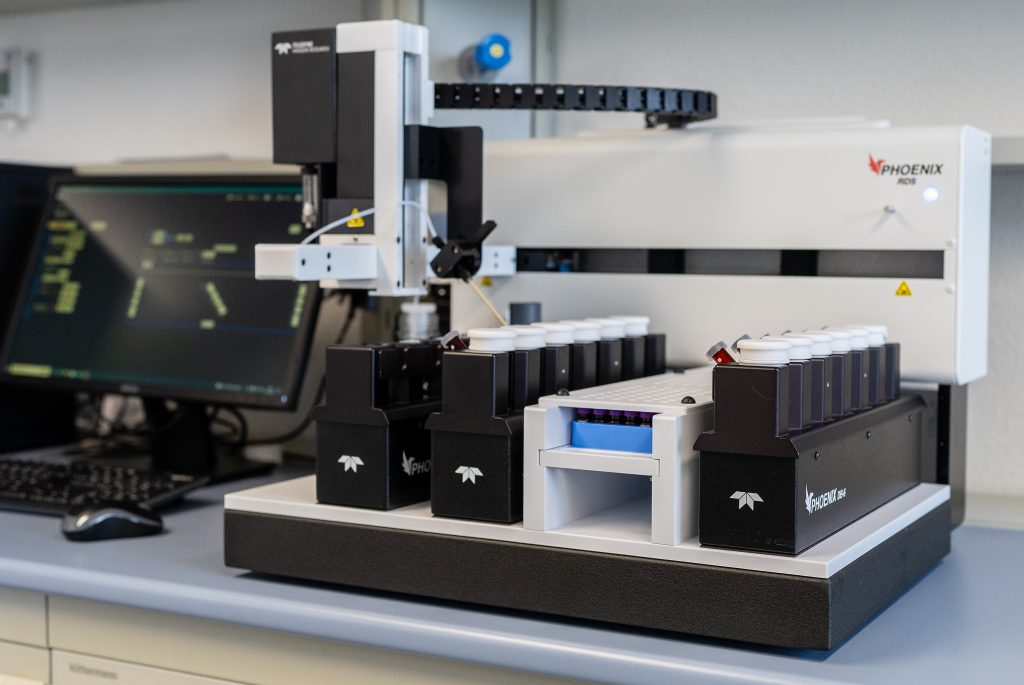
Once the Q2 assessment is complete, sameness in microstructure, arrangement of matter, or pharmaceutical equivalence must be demonstrated. This always includes a comprehensive rheological evaluation, which requires an absolute high-performance rheometer and experience in rheological testing. We offer both. We provide in vitro release testing services, including development analytical methods and receptor composition, membrane selection, validation, and pivotal equivalence studies, as well as the conception and manufacturing of modified formulations. IVRT and IVPT are run on modern, fully automated robotic diffusion stations that can operate 24 cells in parallel. Advanced stirring options and precise temperature control enable superior data quality compared to traditional systems. Additionally, we can determine pH, microscopic appearance, and globule size distribution if this is needed for Q3 characterization.
In many cases, IVPT using human skin is requested for the final demonstration of equivalence. RaDes provides the instrumentation and analytical capabilities necessary to conduct these studies according to highest FDA and EMA standards.
For more information on our in vitro models see https://rades-development.com/en/services/performance-testing/
We rely on state-of-the-art equipment, such as Waters UPLC systems with UV/VIS and MS detectors, HPLC and GC instruments from Agilent, as well as the Phoenix robotic diffusion station for IVRT and IVPT.
For more information on our labs and instruments see: https://rades-development.com/en/about-rades/our-labs/
References:
- Evers DH, Giebel J, Nienau F, Carle S, Gorissen S, Buske J, Herbig ME, Garidel P, Hagelskamp E, Unravelling the polysorbate 20 composition: A fusion of UPLC-MS analysis and stochastic modelling, Eur J Pharm Biopharm (216), 114854, 2025
- Herbig, M.E.; Evers, D.-H.; Gorissen, S.; Köllmer, M. Rational Design of Topical Semi-Solid Dosage Forms-How Far Are We? Pharmaceutics 2023, 15, 1822. https://doi.org/10.3390/pharmaceutics15071822
- Schoenfelder H, Reuter M, Evers D, Herbig ME, Lunter DJ, Ceramide Profiling of Porcine Skin and Systematic Investigation of the Impact of Sorbitan Esters (SEs) on the Barrier Function of the Skin. Molecular Pharmaceutics, 22 (4), 2019-2028, 2025

Sascha Gorissen, Co-Founder & Head of Laboratory
sascha.gorissen@rades-development.com
Our labs


Modern chromatography systems from Waters and Agilent are used in our analytical labs. In addition to a classic UV/VIS (PDA) detector, all Waters H-Class UPLC systems are also equipped with a QDa detector (single MS) for mass spectrometric determination. The Agilent 1260 HPLC systems including DAD (UV/VIS) detectors complement the equipment and are particularly suitable for routine methods in the QC area. Precise stability chambers allow us to make reliable stability predictions based on accelerated stability studies.
In addition to modern equipment, sample preparation requires a great deal of knowledge, experience and skill, especially for semi-solid formulations.


We use various types of homogenizers and stirrers for lab-scale formulation design and manufacturing. Our main tools for physical characterization are microscopy and rheology, using the Anton Paar MCR102 high performance rheometer. A safety weighing cabinet allows us to handle highly active substances.
In vitro release (IVRT) and permeation (IVPT) studies are performed on the Teledyne Hanson Robotic Diffusion Station (RDS).


Our well-lit and open offices offer a pleasant and friendly atmosphere. All offices and the conference/seminar room are located directly next to our laboratories.

News (Test 2)
RaDes poster on rheological equivalence testing of topical generics
Topical dermatological generics must be characterized also for rheological equivalence to the originator. The EMA “Draft guideline on quality and equivalence of topical products” from 2019 provides specific guidance on how this should be performed.
The parameters to be investigated include viscosity values at different shear rates (viscosity curve), thixotropy testing, yield stress, as well as viscoelastic storage and loss moduli. This requires a high-performance rheometer and expertise to conduct, evaluate, and interpret the specific experiments.
RaDes presented a poster on “Equivalence testing of rheological parameters of generic and branded cream, facing criteria of EMA Draft Guideline 2019” at the “Innovations in Dermatological Sciences Conference” at the Center for Dermal Research, New Jersey, on September 28th and 29th. As we demonstrated, the proposed criteria appear very strict, especially as the variability in some parameters is high even between commercial batches of approved products. The EMA guidance is still in draft but likely to be considered ”state of the art” by the EMA. Some deviations from the proposed guideline may be possible, but should be agreed with authorities in advance based on a robust scientific rationale. Therefore, next to the rheological capabilities, a sound understanding of formulation design and of appropriate statistical evaluation are important.
The poster can be downloaded here. If you have questions on the rheological equivalence testing or if you want to learn more on how rheological characterization helps to design and optimize formulations and processes, please get in touch: michael.herbig@rades-development.com

4-year anniversary of RaDes
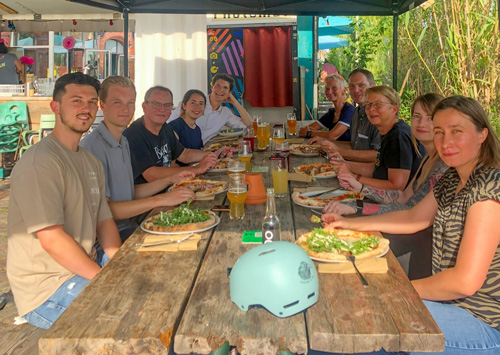
On a beautiful summer day in Hamburg we celebrated our 4th anniversary at RaDes GmbH with some nice drinks and food!
Many thanks to all our clients, partners and friends for the great collaboration during this time!
Internship project on Design of Experiment-optimized creams
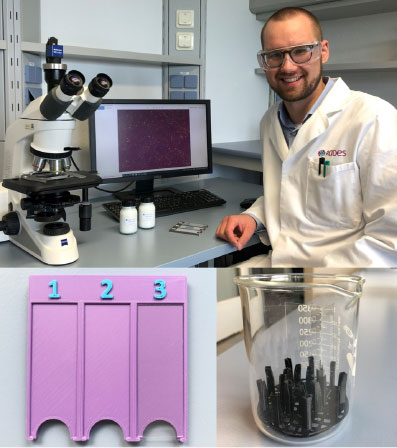
Felix Teschke, pharmacist in the year of practical training from the university of Greifswald is completing his 6 months internship at RaDes. He dealt with the basics of the transformation of topical formulations after application. Furthermore, he has performed a Design of Experiment (DoE)-based optimization of consistency agent-containing cream formulations, especially, with respect to the ideal ratio between hydrophilic emulsifier and co-emulsifier. The results obtained are very valuable for a rational development of such creams.
Felix’s hobby is 3D printing. We have taken advantage of this to equip our labs with some self-printed, helpful tools to facilitate work processes. For example, a holder that enables particularly thorough cleaning of glass slides for sensitive microscopic examinations, or a device for microscopy slides that allows fast, safe handling of these in evaporation profile studies of topical formulations!
How rheology can be used to develop better semi-solid products & processes
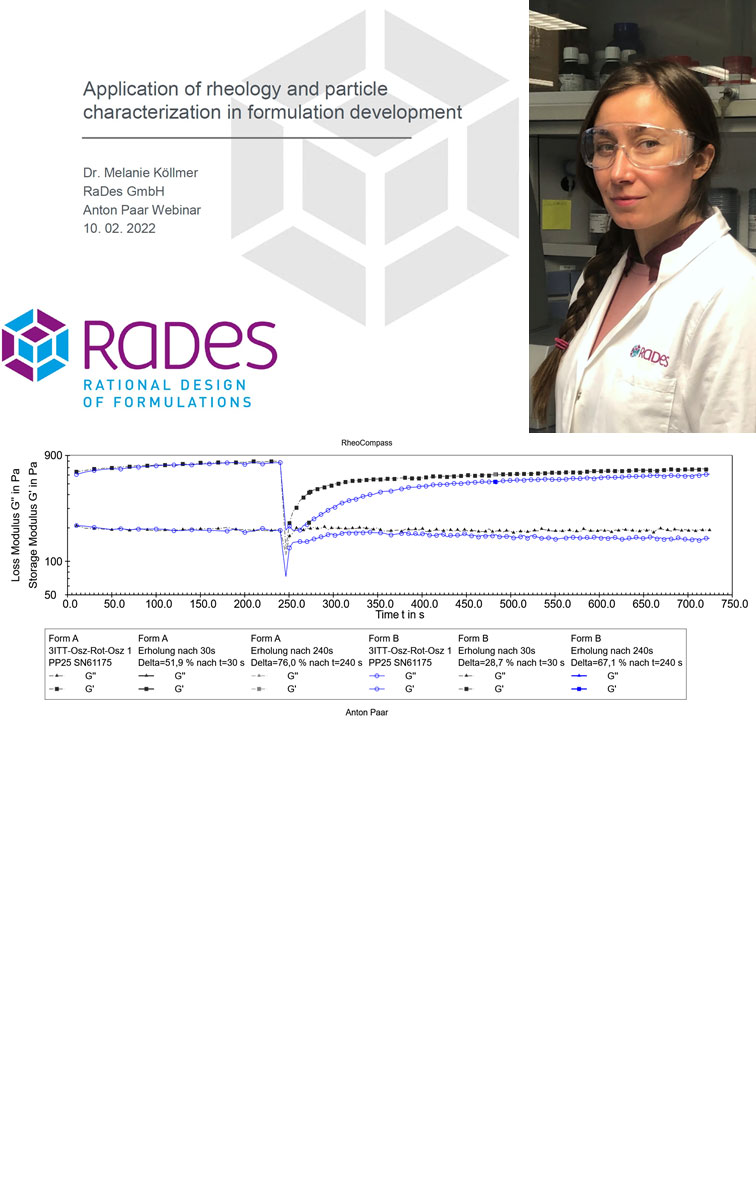
Melanie Köllmer from RaDes presented case studies on how rheology and particle size characterization helped to develop and optimize semisolid formulations in the Anton Paar webinar “A recipe for success: Combining rheology and particle characterization for pharmaceutical and cosmetic product formulation”.
Rheology and particle characterization are great tools to improve the design, process development and control of semi-solid formulations. Especially rheology offers great potential from supporting the design of attractive sensory properties to optimizing stability and diagnosing issues. In addition, increasingly comprehensive rheological characterization is requested by authorities, especially in the context of generic development projects.
Rheology is most powerful, if combined with the knowledge on formulation design and the inner structures of semisolid formulations as well as on regulatory requirements, industrial processes and constraints of quality control. Different questions require different experimental setups and evaluation of different rheological parameters.
In case you missed the presentation, you can download it here.
If you’re interested to learn more about how rheological characterization may help for the success for your project, please contact Melanie at: melanie.koellmer@rades-development.com and let’s discuss!
RaDes wishes happy holidays!

Welcome Elina!
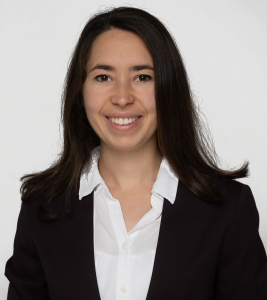
In November 2021, Dr. Elina Hagelskamp joined RaDes as analytical scientist. Elina obtained her Master’s degree in chemistry from LMU Munich with distinction. In her PhD project in organic analytical chemistry she focused on the investigation of catalytically active molecules in the context of prebiotic chemistry and identified a class organocatalysts with potential relevance to the origin of life. In this project, she gained expertise in various applications of chromatography and mass spectrometry. Together with her sound knowledge of organic chemistry and a special interest for mathematics, she will be an important part of the analytics team at RaDes. Her focus at RaDes is analytical method development, stability investigations and in vitro release & permeation testing.
Bentrio™ – a nasal spray for protection against airborne viruses, developed with contributions from RaDes
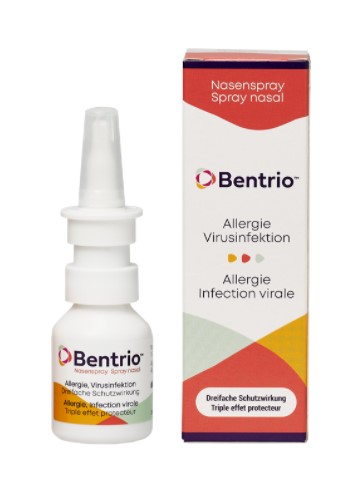 BentrioTM is a nasal spray which is designed to help people to protect themselves against airborne viruses and allergens. It was developed by Altamira Medica, a Swiss company, and recently got launched in Germany with more countries to follow. At RaDes, we are proud that we were able to contribute to the development of its formulation through our collaboration with Altamira.
BentrioTM acts by forming a thin protective layer on the nasal mucosa. Based on physical principles, it can trap viruses such as SARS-CoV-2 and thus reduce the viral load in the nose.
Considering the challenges from the current and potential future virus variants, Bentrio can provide additional protection against Covid-19 in combination with vaccinations and general hygiene measures.
To make this possible, several interesting formulation challenges needed to be resolved: the choice of the right type and concentration of two key components, a mineral-based thickener and triglyceride, and the perfect rheological profile. The formulation liquifies under shaking to become nicely sprayable; following application to the nose, it quickly recovers viscosity to form a thin protective film on the nasal mucosa without running off (a quick “thixotropic recovery” in the words of rheology).
For more information see: www.bentrio.com
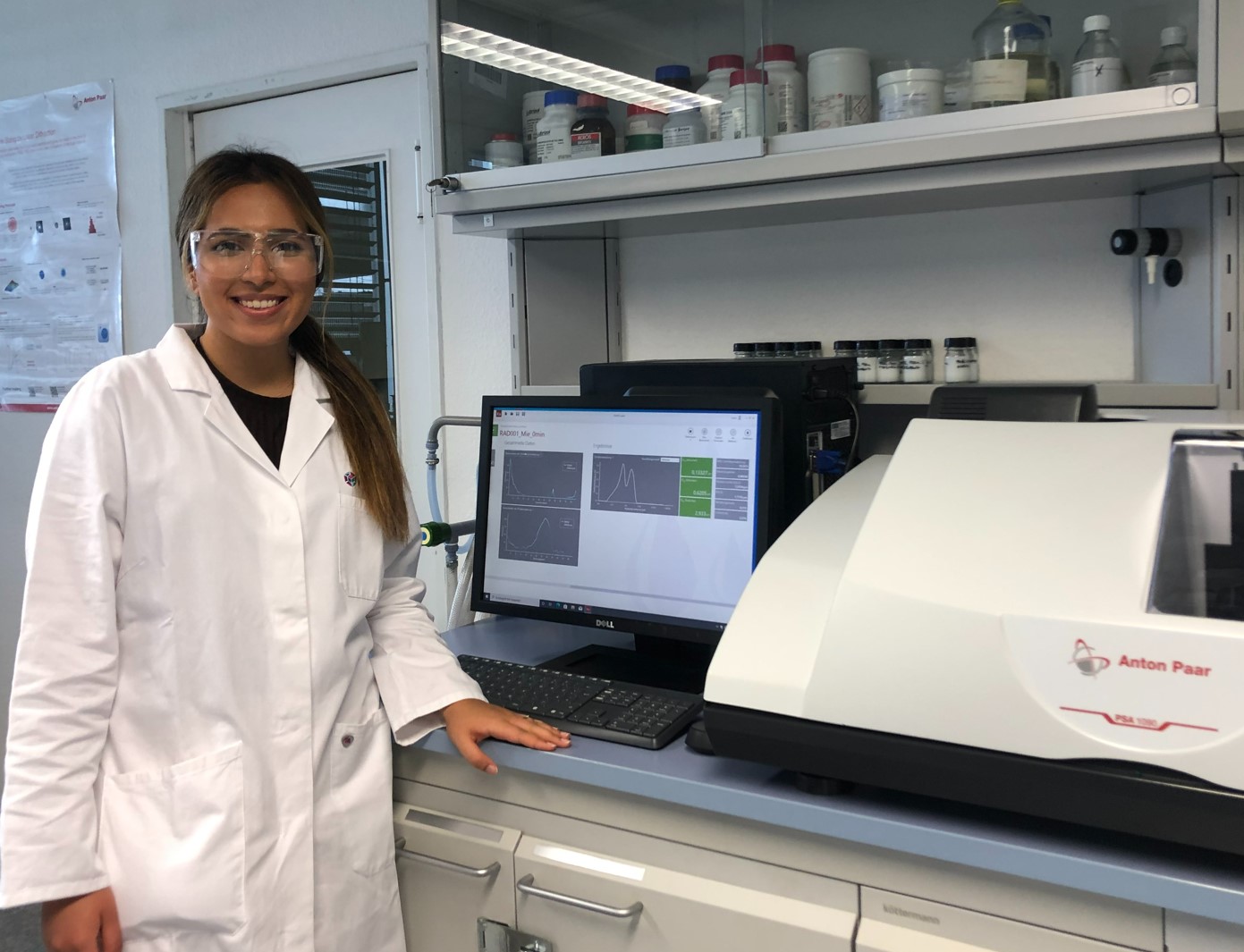 Particle size determination of emulsions and suspensions plays an important role in formulation and process development and control. Measurement by laser diffraction offers many advantages such as the measurement of thousands of particles within seconds, a wide measurement range as well as high accuracy and reproducibility.
However, often emulsions are more complex than just “oil droplets in water”. For example, gel phase structures formed from emulsifiers and co-emulsifiers may exist in parallel to the oil droplets. This raises the question if there are methods which are suitable of determining both species in parallel or procedures that could reliably “destroy” the gel phases to determine the primary oil droplet size only. Also, in some emulsions, oil droplets may be covered by multiple layers of emulsifiers which may or may not be subject to change during sample preparation.
In addition, the choice of the appropriate model for data processing is not always trivial: The Fraunhofer model requires only few input parameters but will lose validity for small particle sizes whereas the more universal Mie model requires more input parameters.
Hossa Bonyadi, pharmacist in the year of practical training from the university of Marburg, addresses such questions during her 6 months internship at RaDes. She performs the studies on a PSA 1090 particle sizer from Anton Paar GmbH. Her results will help to choose the appropriate sample preparation and evaluation models for different formulation types and help in the interpretation of particle size distribution data of complex emulsions.
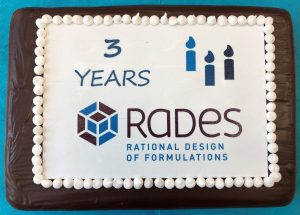
Three years ago, at the beginning of July 2018, we started RaDes. From scratch. That means: building the labs, acquiring instruments, creating a website, considering when it was the right time to approach the first potential clients, etc. Hard work and quite a bit of uncertainty during a hot summer.
This seems so long ago now. In the meantime, we’ve established great partnerships with many clients and successfully solved a variety of development challenges from formulating actives to developing analytical methods to improving the robustness of existing products.
We’re now serving customers in Germany, Switzerland, France, UK, Austria, Slovakia and the USA. Some first products which we’ve developed already reached the market. We’re establishing a QMS, published papers, filed a patent, gave lectures and talks and continued to learn so much from collaborations and discussions. We hired new colleagues and continuously expanded our instrumentation.
Thank you to all our clients, partners, friends and, in particular, to our great team who made this possible!
A lot to celebrate – due to the pandemic, still with restricted opportunities to do so.
For now, we started with a delicious cake. Soon, the whole RaDes team will be fully vaccinated and we’ll take the opportunity to catch up with celebrating together!
For chromatography and mass spectrometry, we have acquired several instruments from Waters – a world leading manufacturer in this field.
Waters found our history and projects interesting and published a case study on us based on an extensive interview with our head of laboratory Sascha Gorissen.
Read the report with interesting insights at: Case Study RaDes – Waters
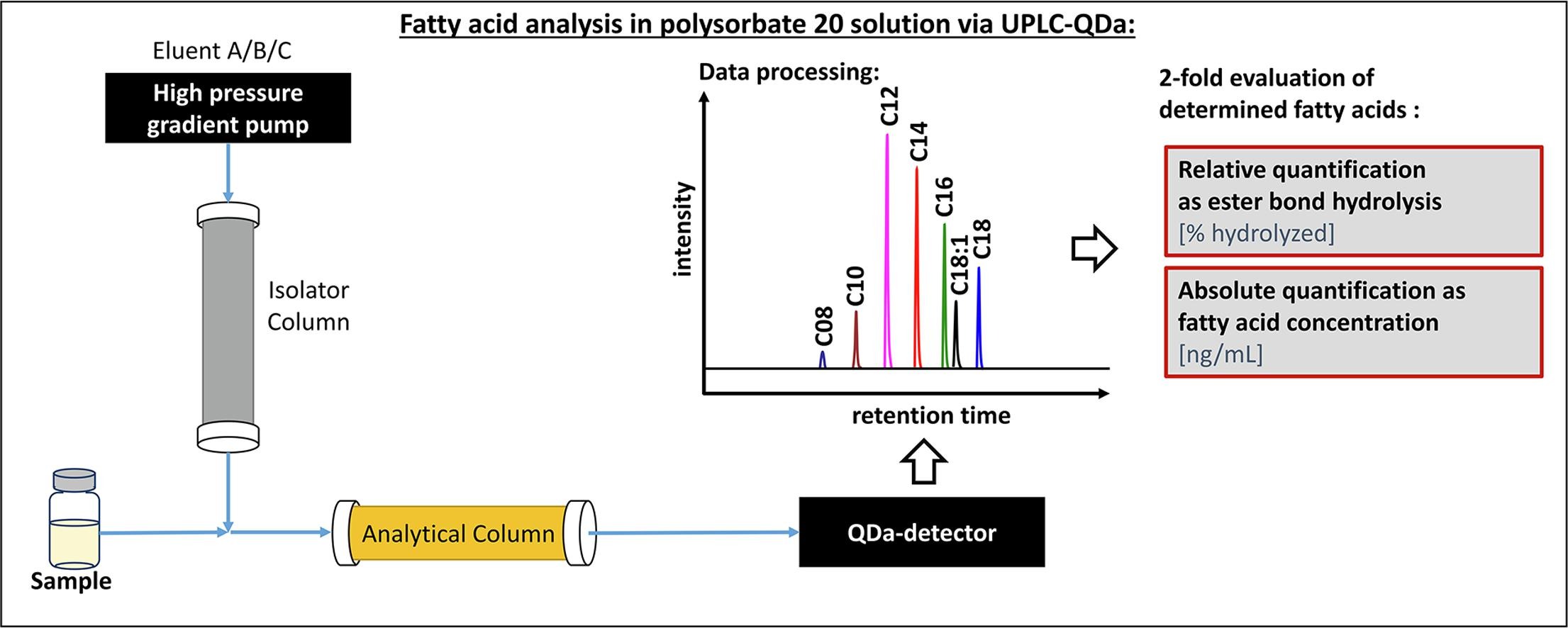
Following up on the last year’s publication on a novel quantification method for polysorbate 20, now a paper focusing on the detection of free fatty acids in biopharmaceuticals via UPLC-QDa analytics was published. Again, Dirk Evers from RaDes made essential contributions to this work.
Sensitive and robust quantification of fatty acids (FA) is essential for the monitoring, understanding and potential improvement of the stability of polysorbates in biopharmaceutical formulations.
FA may be released over time by enzymatic degradation of polysorbates caused by traces of host cell enzymes in biologics. Due to their low aqueous solubility, fatty acids may precipitate as particles which is an important concern for quality and safety.
The method presented offers several advantages for convenient monitoring of FA release: It is label-free and allows the determination of released FAs as percentage of ester bond hydrolysis and as absolute concentration. Additionally, by using an isolator column to remove trace levels of FAs present in the eluents the sensitivity of the method is improved. It was the first time in FA analysis that such a procedure was successfully employed.
For more information, see the full publication at https://www.sciencedirect.com/science/article/pii/S1570023221001975 or contact us at info@rades-development.com
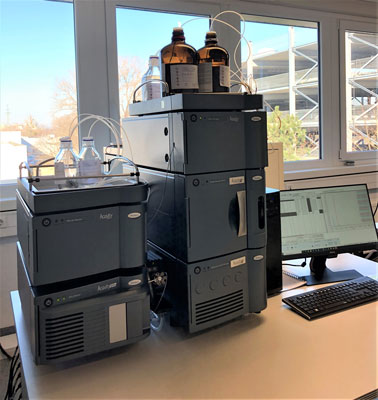
For what we do at RaDes, the Waters UPLC system equipped with eλ-PDA (UV/VIS) plus QDa (single mass) detectors proofed to be extremely useful. Therefore, to support our growth, we just got our third one installed!
The system permits us to speed up method development and the rapid analysis also of larger quantities of stability and IVRT samples. Thanks to the QDa mass spec detector, it allows the detection of also poorly UV-active compounds with high sensitivity and the identification of co-eluting compounds.
An instructive example of how this adds value to challenging analytical projects, you may have a look at the recent publication on identification and quantification of the complex mixture of subspecies in polysorbate 20: https://doi.org/10.1016/j.jchromb.2020.122287.
Many thanks to Waters for the continued great cooperation!

Der „Jugend forscht“-Wettbewerb ist eine großartige Möglichkeit für Jugendliche, ihr Talent in einem selbstgewählten wissenschaftlichen Projekt auszuprobieren und weiterzuentwickeln. Zum dritten Mal in den zweieinhalb Jahren seit Bestehen unterstützte RaDes den „Jugend forscht“ Regionalwettbewerb Hamburg Volkspark durch zwei Juroren im Bereich „Chemie“ (https://www.hamburg.jugend-forscht.de).
In diesem Jahr haben Melanie Köllmer und Dirk Evers eine Reihe spannender Projekte von jungen naturwissenschaftlichen Talenten begutachtet – Pandemie-bedingt in einem reinen Online-Format. Zum zweiten Mal hat die RaDes GmbH dabei ein Schnupperpraktikum in den RaDes Laboratorien als Sonderpreis für ein herausragendes Projekt vergeben. Wir freuen uns, auf diesem Weg einen Beitrag zur Förderung und Begeisterung junger Menschen für die Forschung & Entwicklung zu leisten.
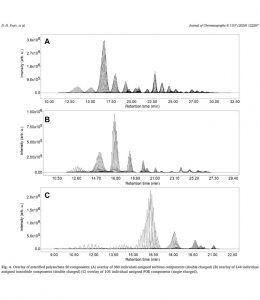
Polysorbates are used in around 70% of all biopharmaceutical formulations as generally safe and effective stabilizers. However, in recent years, the risk of particle formation in parenterals caused by chemical or enzymatic degradation of polysorbates gained attention.
Polysorbates are complex mixtures; theoretically, the number of possible subspecies may be infinite. To enable the mitigation of risks, powerful and reliable analytical methods are necessary which allow separation, identification, and quantification of the subspecies. This then enables a mechanistic understanding of degradation pathways as basis for improved product safety.
We are pleased that now, with essential contributions of Dirk Evers from RaDes, a novel method for the selective marker-based quantification of polysorbate 20 in biopharmaceutical formulations was published. Using a modern Waters UPLC-H Class with selective QDa detector, 676 subspecies could be assigned. For a representative selection of 41 markers a quantification method was developed and validated.
For the full article see: https://www.sciencedirect.com/science/article/pii/S1570023220300143?via%3Dihub
Contact: info@rades-development.com
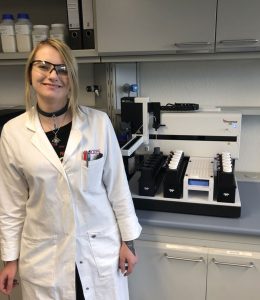
As of mid-August 2020, Mandy Rosenberger, joined our team as chemical laboratory technician. She has several years of practical work experience in the laboratory and is familiar with a wide range of analytical methods. Her main focus at RaDes is sample preparation of semi-solid formulations, chromatography with UV/Vis and mass spectrometric detection, as well as support in the manufacturing of formulations.
We are very happy that Mandy is now part of our team!
For two months now, life and work have been strongly influenced by the effects of the Corona pandemic.
At RaDes, we took early action and prepared ourselves. Anticipating and mitigating risks is a well-established practice for us. We are stocked with important materials (eluents, excipients) and hold our meetings virtually to avoid non-essential contacts.
An important finding is that it has paid off that we have invested in a powerful IT infrastructure from the very beginning: every employee has a notebook, data and analysis instruments can be securely accessed from home. Our laboratory operations continue in accordance with official regulations and a “backup team” working from home is in place to ensure business continuity and to be reliably available for our customers.
We take the situation seriously in order to protect the health of our employees and to act far-sighted and socially responsibly. We also do not lose sight of what was important before “Corona” and is crucial for the future: many things that make up good development work will continue to exist. Some things will change. The use of modern technology and digitalisation is changing from “nice to have” to a must have in many areas.
Finally, we would like to take this opportunity to thank our customers, suppliers and business partners. During this time, we have had many positive experiences of friendly and constructive cooperation and commitment to move things forward together in spite of obstacles.
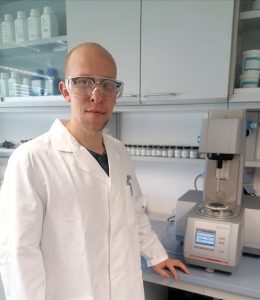
As of May, Manasse Feichtinger started a six-month internship at RaDes as part of his compulsory training as pharmacist. Manasse studied pharmaceutical sciences at the university of Marburg; in addition to that, he is a trained laboratory technician with experience in the analysis of semi-solid formulations.
At RaDes, Manasse is going to investigate rheological characteristics of semi-solid excipients and formulations, including oscillatory studies that allow deeper insights to the inner structure of materials, as well as thermo-rheology.
A particular focus is to what extent materials from different suppliers, which all comply with pharmacopeial specifications, show rheological differences that may be relevant for stability, process development, and performance. In addition, it will be investigated how rheological features of pure structure-giving excipients relate to their performance after incorporation in a formulation.
In RaDes’ second year of existence, this is our first student project. As we are committed to the development of talents, innovation, and the ambition to understand semi-solid formulations more and more systematically, we expect that more will follow!
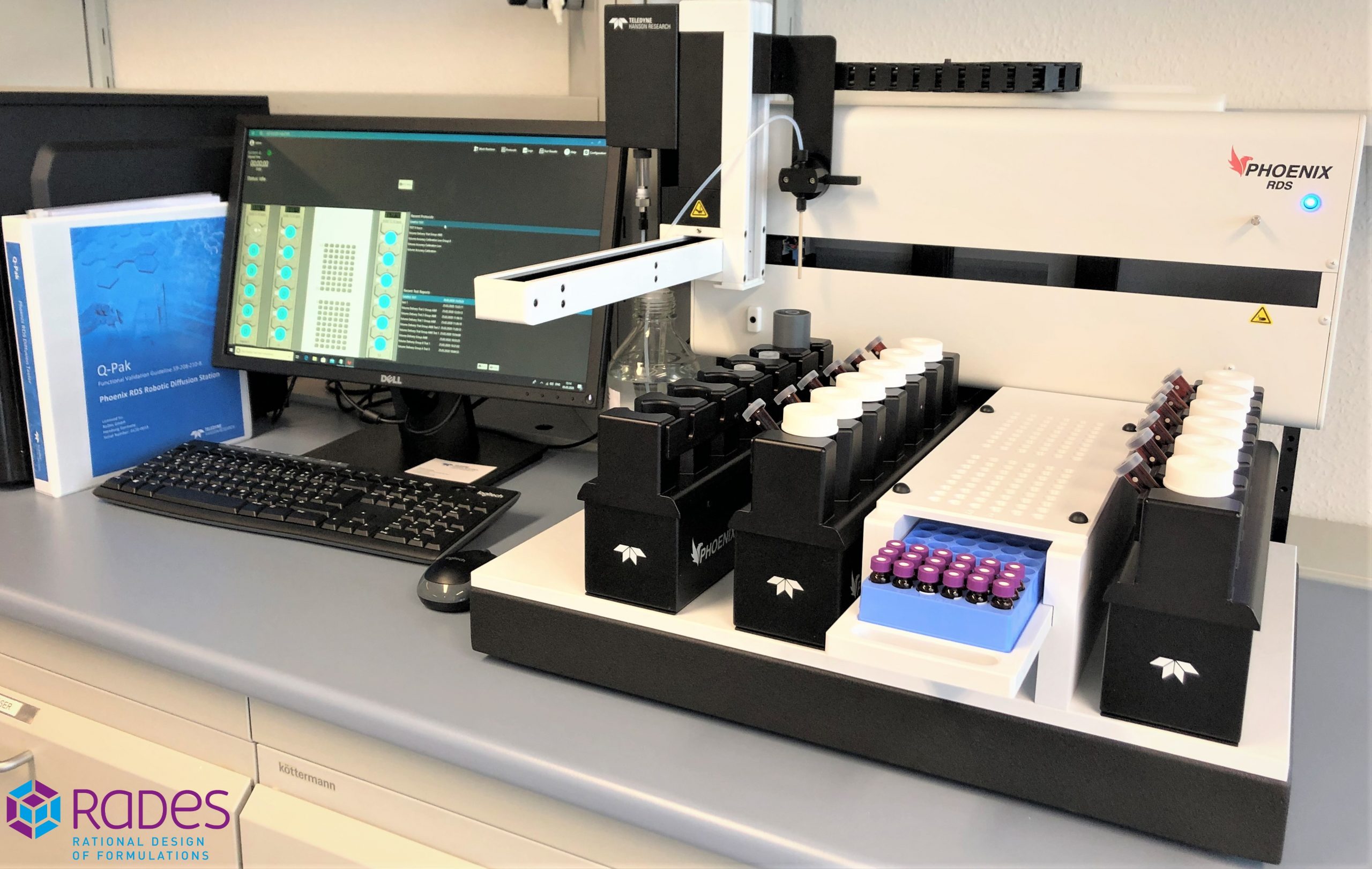
Lack of control over variability factors can compromise data quality of in vitro release testing and cause ambiguity in the assessment of skin permeation.
We are proud of having implemented Germany’s first Phoenix™ RDS (Robotic Diffusion Station) with dry heat diffusion cells and being able to offer the benefits of this technology to our customers.
Its advantages versus the traditional technology of in vitro permeation testing include a significantly better temperature control provided by the Phoenix dry heat system as compared to circulating water baths systems. As diffusion is a function of temperature, this improves data quality. Similarly, a superior control of mixing speed is achieved. In addition, reduced maintenance and faster setup making it more economical.
Many thanks to Bruna Lousada from Teledyne Hansen Research and Severin Schweisthal & Antony Wozniak from Cole Parmer for the great collaboration and support!
www.hansonresearch.com/diffusion-testing/phoenix-dry-heat-systems
 We are very pleased that Dr. Petra Lohmann joined the RaDes team at the beginning of January 2020 as head of quality assurance.
Petra Lohmann has more than 20 years of experience in quality control and quality assurance in responsible positions, which makes her extensively familiar with quality requirements for pharmaceuticals, medical devices, cosmetics and biocides.
She is responsible for the development and maintenance of the quality management system at RaDes and offers consulting services and expert statements in the field of quality management.
Further information is available at: https://rades-development.com/en/about-rades/team/dr-petra-lohmann/
RaDes war eingeladen, sich auf der „Ins Netz gegangen“-Veranstaltung von Life Science Nord zu präsentieren. Die einzige Regel des Events, das am 27.11.19 in Lübeck stattfand, war: die Präsentation darf maximal 6 Minuten dauern. Michael Herbig, Geschäftsführer von RaDes, hat die Firma in 5 Minuten und 42 Sekunden vorgestellt und sich über die interessanten Diskussionen mit anderen Netzwerkmitgliedern im Anschluss gefreut!
Unter “RaDes bei Life Science Nord” finden Sie unsere Präsentation, für die Sie sich so viel Zeit nehmen können, wie Sie möchten.
On 20.09.2019 our employee Janek Giebel was awarded by the Chamber of Industry and Commerce of Lübeck for his outstanding performance in the final examination as a chemical laboratory technician. We congratulate him very much and are happy that he enriches our team with his excellent work!
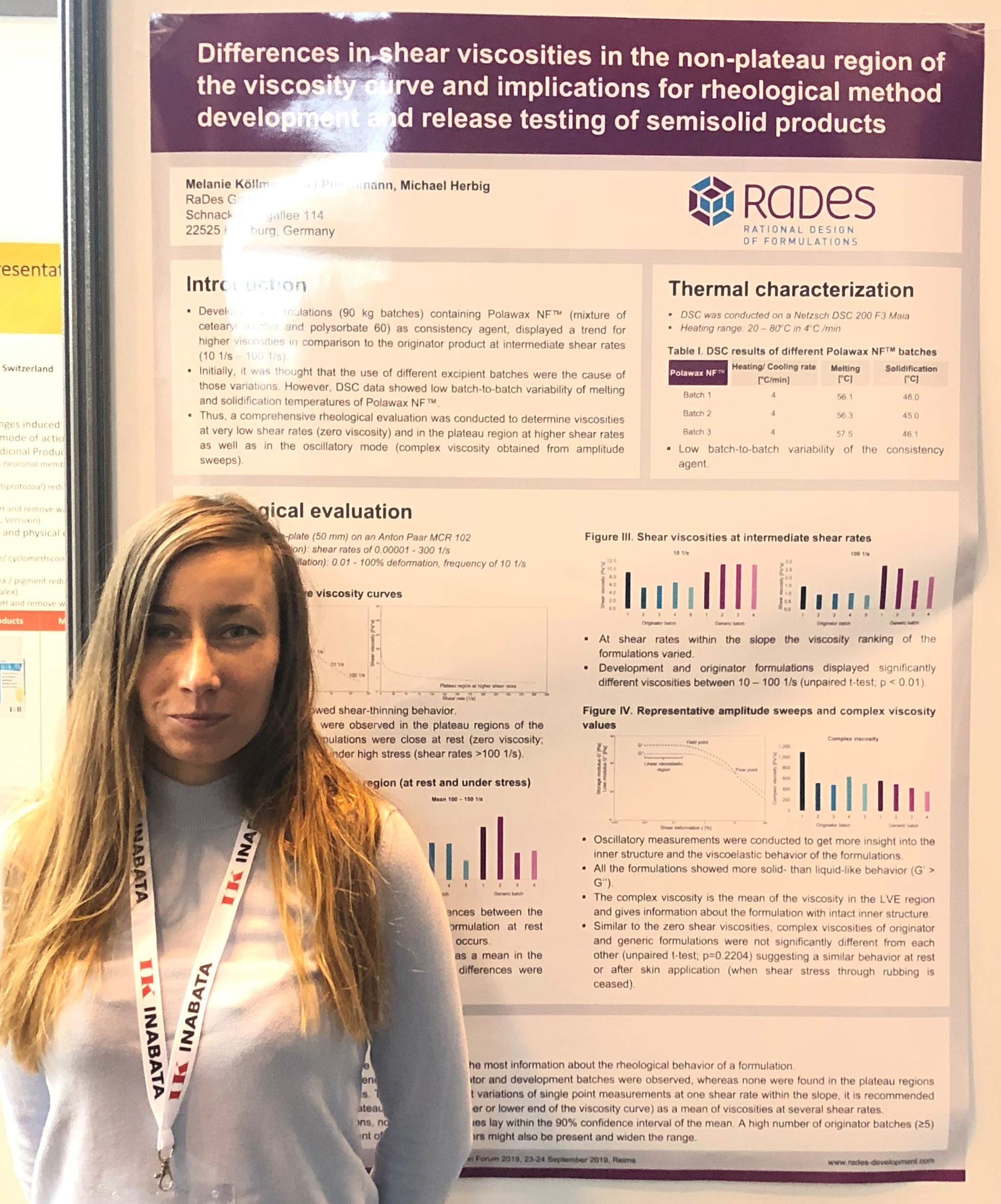 On 23 – 24 September Melanie Köllmer and Michael Herbig attended the Skin Forum in Reims, France. They enjoyed the scientific program with many interesting and relevant contributions and the inspiring discussions with other participants. Also, our poster “Differences in shear viscosities in the non-plateau region of the viscosity curve and implications for rheological method development and release testing of semisolid products” was well received and led to interesting discussions. For more information on services we offer around rheological characterization of formulation have look at our attached flyer.
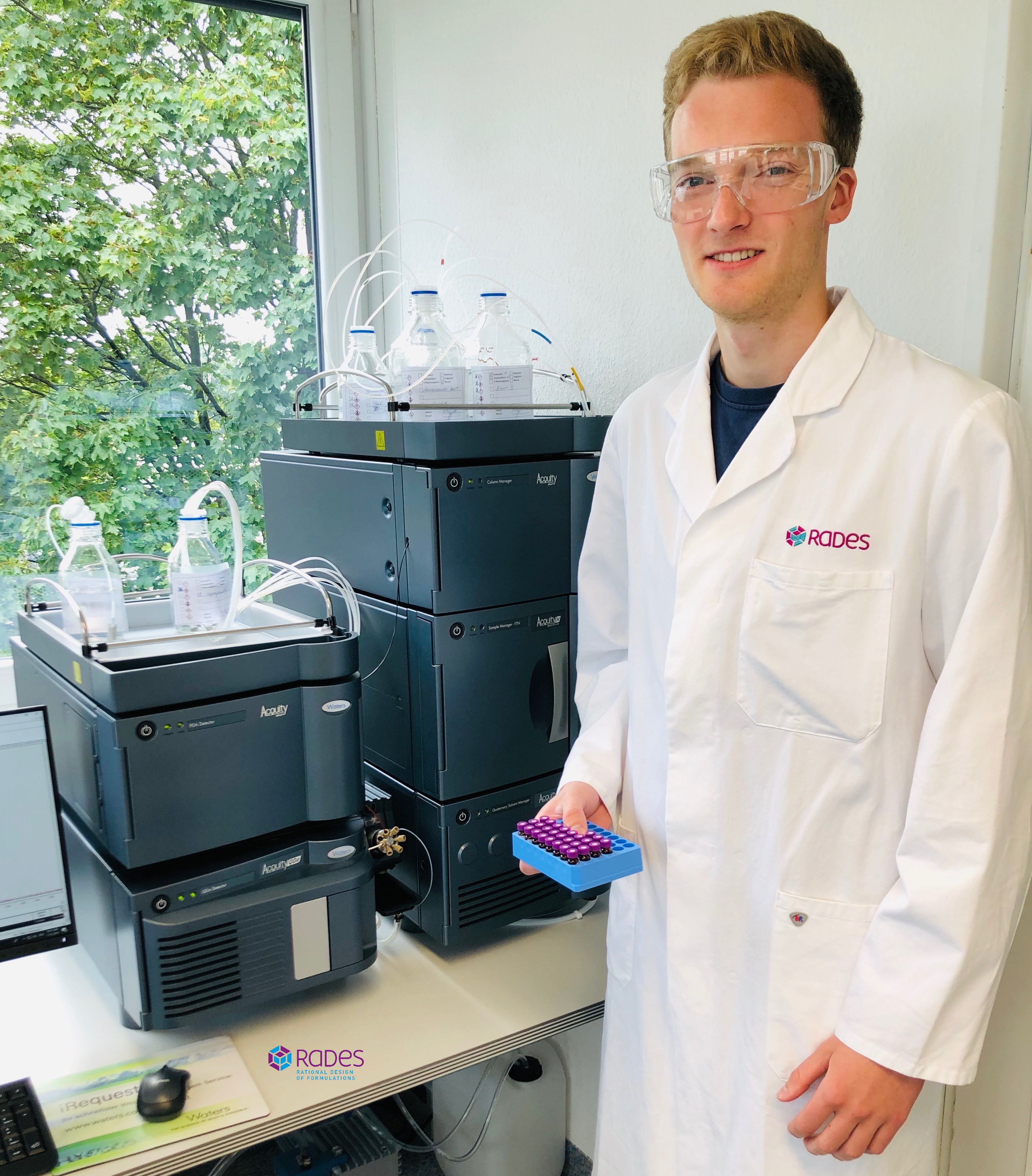
As of July, Janek Giebel has joined the RaDes team! He very successfully finished his apprenticeship to become a chemical laboratory technician in June 2019. During his training he already collected 3 years of experience in the analysis of semi-solid formulations.
Janek will mainly support us in analytical work (HPLC, UPLC, MS) as well as in galenic development and testing of liquid and semi-solid products.
We are happy that Janek is part of our team!
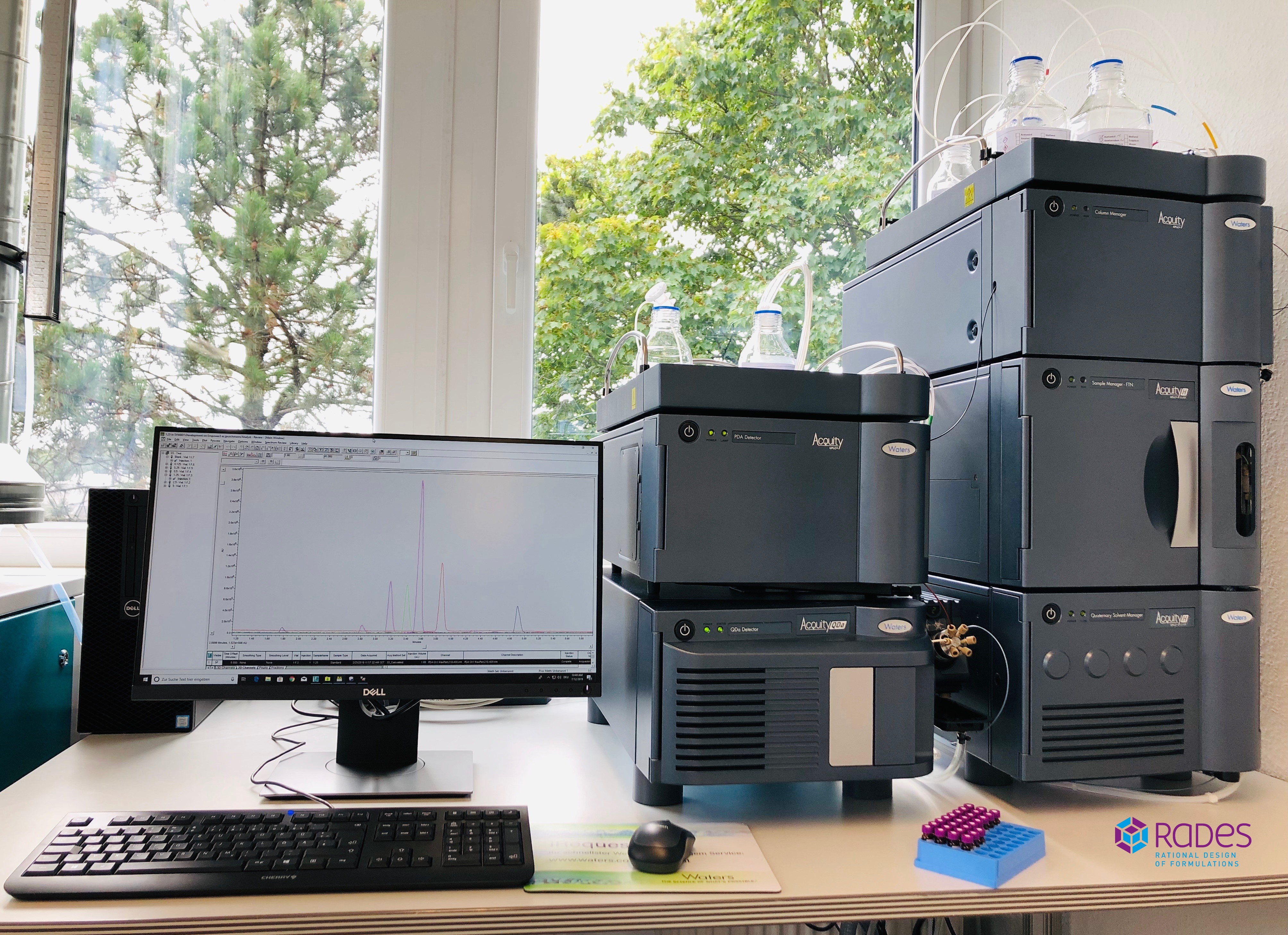
After a successful first year we have extended our modern analytical equipment with an additional Waters ACQUITY™ UPLC™- H-Class with PDA & QDa (single mass spectrometer) detectors. The new system is also equipped with a solvent selection valve (6 mobile phases) and a column manager (up to 4 columns) and is therefore ideally suited for method development as well as for the analysis of large sample quantities.
All our HPLC and UPLC™ instruments are operated with the latest version of the chromatography data system Empower™ 3 (Service Release 3) from Waters GmbH to ensure high quality data management.
The new equipment allows us to further increase our capacity and flexibility in handling customer projects.
At the beginning of July 2018, the history of RaDes began with the set-up of the laboratories and the creation of the website. In September the founding team was complete, in November the laboratories were fully operational. And after one year we are an established, growing development service provider!
We are grateful for the many positive experiences and collaborations and would like to thank our customers, partners, friends and look forward to further collaborations!
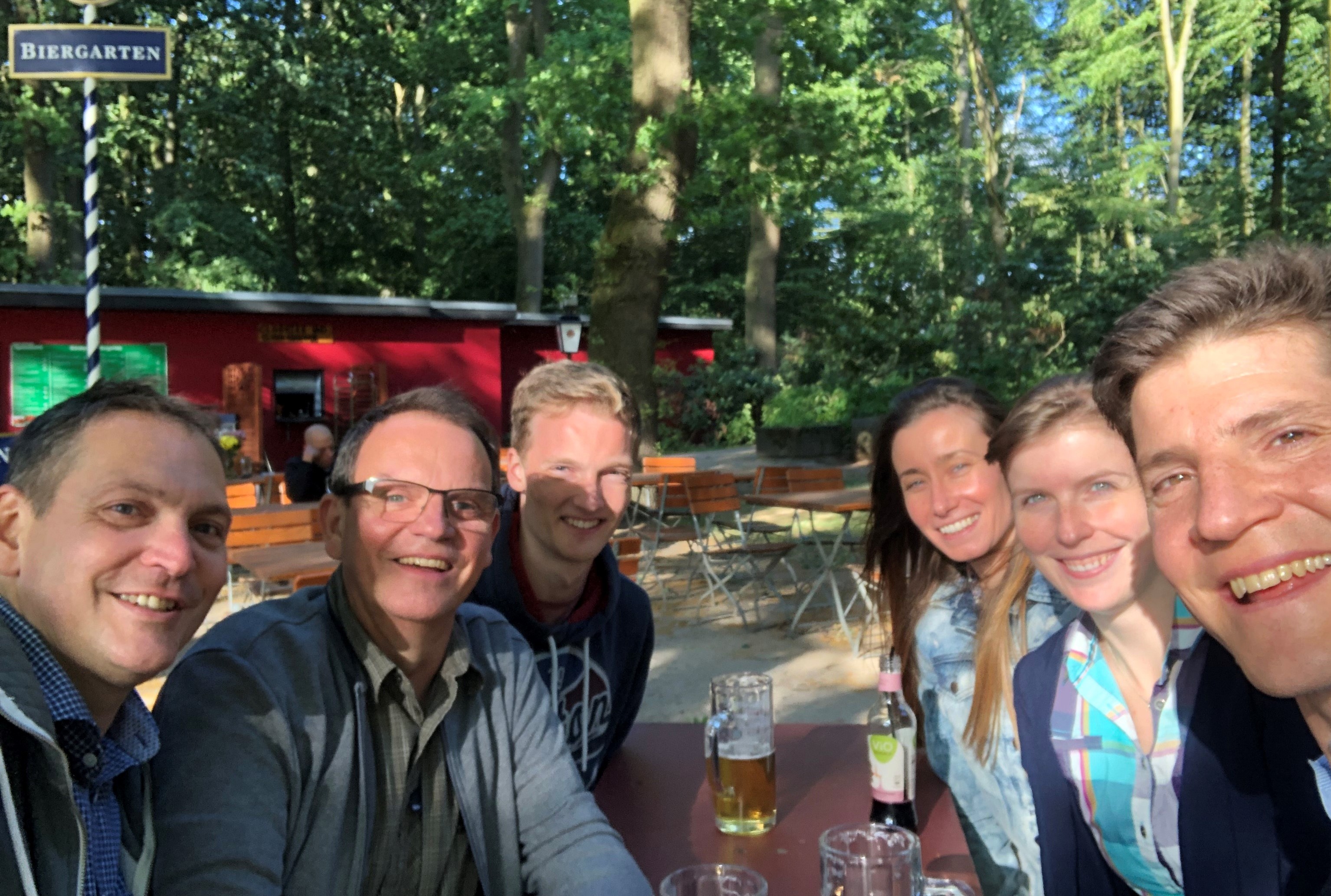
In the first months of this year, three research papers were published by RaDes scientists. These address different aspects with high practical relevance for the systematic development of liquid and semi-solid formulations:
The first paper published was a systematic evaluation of the Skin PAMPA model (‘Investigation of the Compatibility of the Skin PAMPA Model with Topical Formulation and Acceptor Media Additives Using Different Assay Setups’). In this, the general compatibility of the model with non-aqueous formulation systems was demonstrated and solvent concentrations above which there is a risk of extraction of lipids from the membrane were established. In addition, the potentials and limitations of a modified setup placing the donor on top were described.
DOI: https://doi.org/10.1208/s12249-019-1305-3
Furthermore, the influence of the aqueous concentration of betamethasone dipropionate on its stability in emulsion gels was investigated. It could be shown that with increasing emulsifier concentration more active substance was distributed into the water phase which causes increased degradation. The methods and insights pave the way to formulation options to stabilize hydrolysis-prone actives by “entrapping” them in the oil phase. DOI
DOI: https://doi.org/10.1016/j.ijpharm.2019.02.044
In order to determine the emulsifier content in the water phase, a new method for quantifying polysorbate 80 was developed. This means that polysorbate 80 can also be determined in concentrations far below the critical micelle formation concentration. Using a DoE approach, it was also possible to determine how the oleic acid contained in this highly complex mixture can be reliably determined in the presence of isomeric C18:1 acids.
DOI: https://doi.org/10.1016/j.chroma.2019.04.015
If you have any questions or comments or if you see potential how our methods and insights can be helpful in your projects, please do not hesitate to contact us: info@rades-development.com or +49-40-57004180

Julia Puschmann of RaDes GmbH was awarded the first prize of the “Hans Christan Korting-Nachwuchspreis für Dermopharmazie” at the annual conference of the Society for Dermopharmacy and had the opportunity to present her work in two short talks. We congratulate Julia on her award!
She received it for her poster entitled “How does the emulsifier concentration affect API stability in emulsion gels and skin penetration?”. It demonstrates that it is possible to stabilize hydrolysis-prone actives in aqueous creams if the active is lipophilic and you use the right formulation technology! Using the active betamethasone dipropionate, she elucidated the underlying mechanisms, such as the influence of emulsifier concentration and the correlation of degradation with increasing free drug concentration in the aqueous phase.
In addition, she demonstrated that the skin penetration, tested on the pig ear with the Hamburg model (https://doi.org/10.1016/j.ejpb.2015.03.030), was further influenced by a changed saturation of the formulation upon addition of co-solvents.
Meanwhile, her corresponding paper was also published: (https://doi.org/10.1016/j.ijpharm.2019.02.044).
If you have any questions or comments, don’t hesitate to contact us: info@rades-development.com
Emulsions are important systems in drug delivery, especially for topical application, 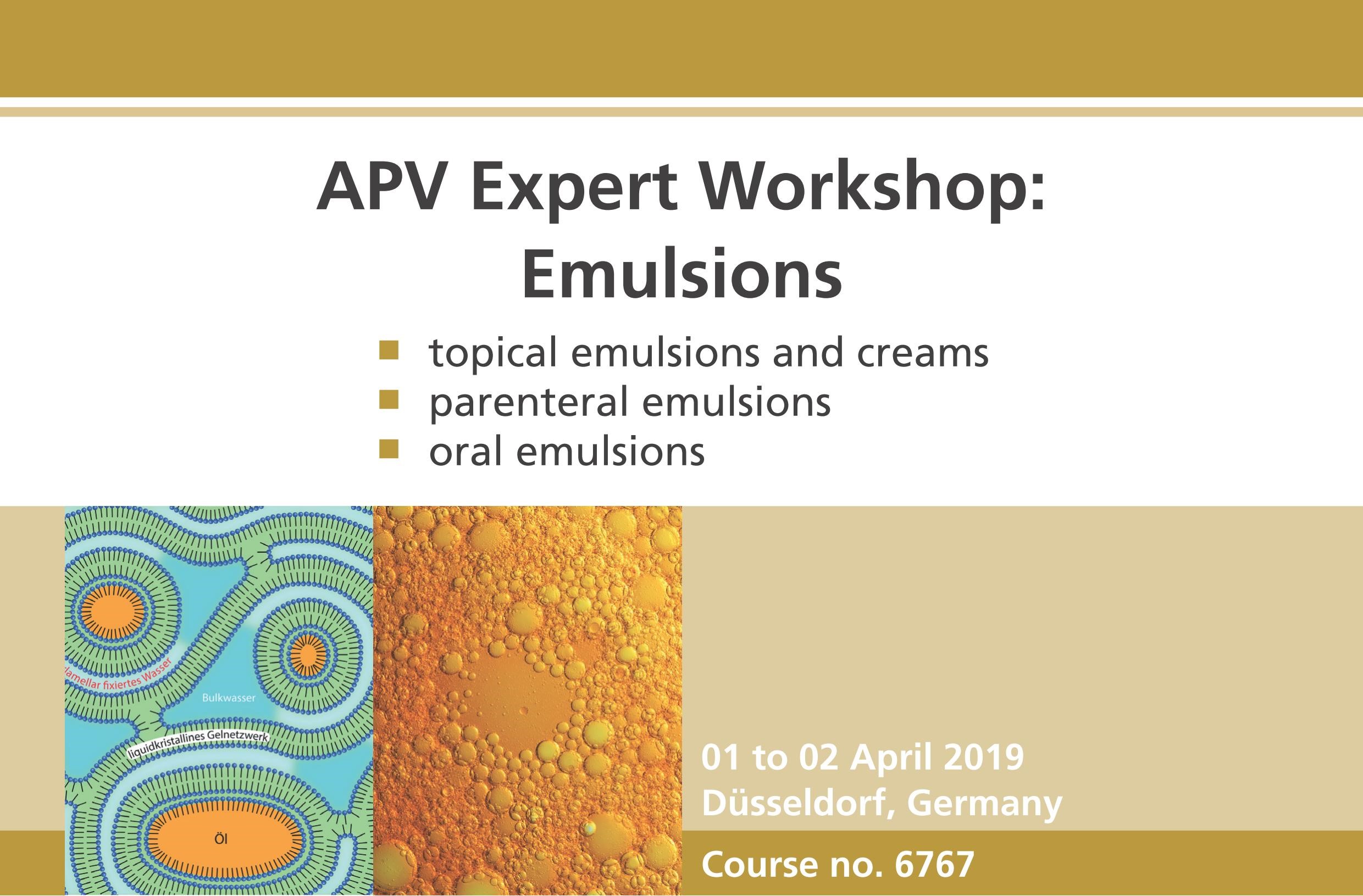 but also orally and parenterally. The APV workshop on 01 to 02 April 2019 will provide a comprehensive insight, including formulation, characterization and processes.
Michael Herbig of RaDes will give a presentation on: ”Cream 2.0“ – Enhancing scope, performance and robustness of emulsions through rational design”. He is presenting new insights in distribution phenomena in emulsions and their effects on stability and performance, on effects of emulsifiers, consistency adjusting systems and approaches to modify skin penetration.
Find the program details here: https://www.apv-mainz.de/fileadmin/dateiablage/apv-mainz/Seminare/oeffentllich/6767_Emulsions_experts.pdf
If you’re interested in further information, don’t hesitate to contact us: info@rades-development.com.
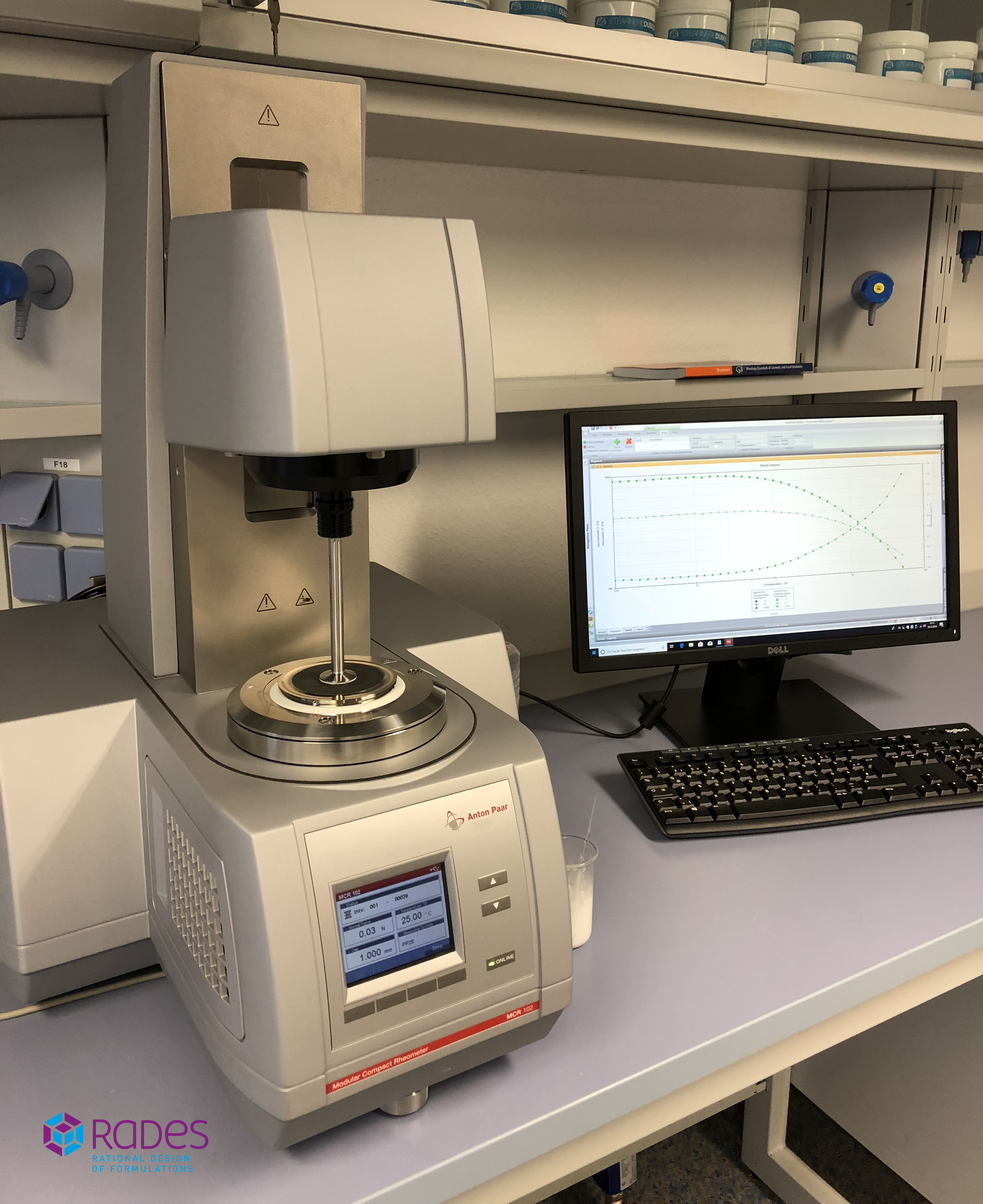
With the implementation of the rheometer MCR 102 by Anton Paar GmbH we have added a new tool for formulation characterization to our equipment list. With this instrument we can perform both oscillatory and rotational measurements of semisolids and liquids. By variation of the chosen system (plate/plate, cone/plate, cylinder/beaker) we can obtain information on structure and behavior under stress of different formulation types.
Oscillation rheology allows prognosis for long-term stability and behavior under stress e.g. pumping into the storage vessel. Additionally, the influence of stress on the formulation can be measured. Using special methods, also the recovery of the structure after stress application can be shown. Does the formulation reach its structure before the stress application or is the formulation changed due to the destruction of the inner structure? Furthermore, the impact of varying concentrations, batches and suppliers of excipients can be compared to collect data on critical quality attributes e.g. the behavior under thermal stress.
Various formulations regarding type (emulsions, creams, ointments etc.), excipients (critical quality attributes) and storage conditions can be compared to evaluate the best possible prototype for your development and to support the trouble shooting of existing products.
If you have any questions, don’t hesitate to contact us: info@rades-development.com
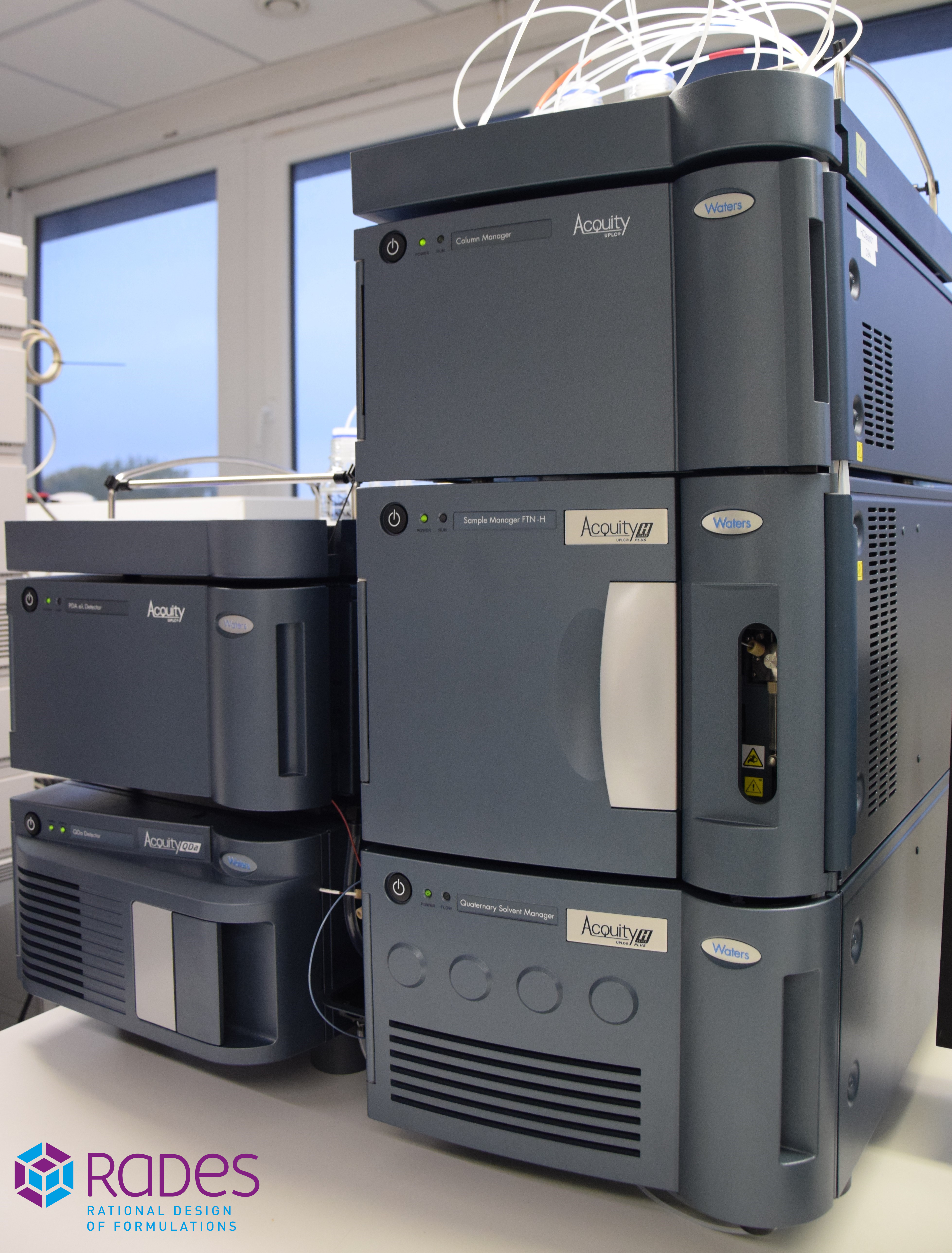
Since end of October, a Waters ACQUITY™ UPLC™ H-Class PLUS with PDA eλ (UV/VIS) & QDa (single mass spectrometer) detectors expands the analytical equipment at RaDes GmbH.
We can cover a broad range of customer needs – from method development using Quality by Design, the transfer of analytical methods between HPLC and UPLC™ technology, up to the fast and reliable analysis of a large sample size.
What do these detectors stand for?
PDA eλ: highly sensitive photodiode array UV/VIS detector with an extended wavelength range between 190 nm to 800 nm to receive spectral information up to the visible range (e.g. to investigate discolorations) and for a robust quantification of compounds over a wide linear range.
QDa: Mass spectrometer (size of a UV/VIS detector) for peak tracking, quantification of compounds at a low concentration level or with a low UV absorption, assessment of co-elution.
The system contains next a solvent selection valve (six additional solvents) a column manager (four columns) to significantly save time and resources during method development.
All our HPLC and UPLC™ instruments are connected to the latest version of Empower™ 3 (Service Release 3) of Waters GmbH to ensure high-quality data management.
Particular benefits for our customers include:
1) Analysis of poor UV-absorbing molecules such as macrolides and peptides – a trend in dermatology.
2) Analysis of low dose formulations – another trend in dermatology.
3) Faster and better method development for classical HPLC:
- The method is developed using a DoE approach with a UPLC™. If necessary, co-eluting peaks are separated by mass spectrometry using the QDa detector and can therefore be precisely evaluated.
- The optimum conditions are selected from the design space considering resolution, run time and robustness.
- in silico transformation into a HPLC method using DoE.
- experimental confirmation on classical HPLC.
The preservation of creams and emulsions is often challenging. On the one hand, dermal drugs must be preserved in accordance with pharmacopoeia regulations in order to actively reduce microorganisms introduced. On the other hand, the number and concentration of the preservatives used should be kept as low as possible in order to optimize the compatibility of the formulation. Generally, depending on the product category and region (EU / USA), there are also maximum concentrations for the use of preservatives. Furthermore, a number of potential incompatibilities of preservatives with other formulation ingredients or primary packaging should be considered.
In the recently published study “Correlation of antimicrobial effects of phenoxyethanol with its free concentration in the water phase of o / w-emulsion gels.” (Puschmann et al., Eur J Pharm Biopharm (131) 152-161, 2018, www.sciencedirect.com) scientists from RaDes GmbH in collaboration with the Pharmaceutical Technology of the TU Braunschweig were able to gain new insights with high practical relevance for the optimization of preservation systems in emulsions.
We were able to establish a new method to accurately determine the concentration of the widely used phenoxyethanol preservative in the oil and water phases. In addition, it was possible to distinguish between free and micellar bound preservative within the water phase. As we expected, antimicrobial efficacy does not depend on the total concentration of the preservative but on the free concentration in the water phase. This in turn can be significantly influenced by the composition of the oil phase, by co-solvents in the water phase and by emulsifier type and concentration.
Our methods and insights make it possible to develop preservative systems faster and more robustly and to optimize the overall system in terms of antimicrobial performance, technical robustness and skin tolerance. Last but not least, based on this, the number of germ load tests necessary in the development phase can be purposefully reduced, thereby saving time and costs. This approach can also contribute significantly to the development of new, optimized preservatives.
For chromatography and mass spectrometry, we have acquired several instruments from Waters – a world leading manufacturer in this field.
Waters found our history and projects interesting and published a case study on us based on an extensive interview with our head of laboratory Sascha Gorissen.
Read the report with interesting insights at: Case Study RaDes – Waters
For our growing team we are looking for an analytical scientist with focus on chromatography.
Awaiting you: versatile, challenging R&D projects, a friendly, dedicated, professional team and opportunities to have an impact and develop yourself further!
Interested: Have a look at: Ausschreibung Wissenschaftler (m/w/d) Analytik
Following up on the last year’s publication on a novel quantification method for polysorbate 20, now a paper focusing on the detection of free fatty acids in biopharmaceuticals via UPLC-QDa analytics was published. Again, Dirk Evers from RaDes made essential contributions to this work.
Sensitive and robust quantification of fatty acids (FA) is essential for the monitoring, understanding and potential improvement of the stability of polysorbates in biopharmaceutical formulations.
FA may be released over time by enzymatic degradation of polysorbates caused by traces of host cell enzymes in biologics. Due to their low aqueous solubility, fatty acids may precipitate as particles which is an important concern for quality and safety.
The method presented offers several advantages for convenient monitoring of FA release: It is label-free and allows the determination of released FAs as percentage of ester bond hydrolysis and as absolute concentration. Additionally, by using an isolator column to remove trace levels of FAs present in the eluents the sensitivity of the method is improved. It was the first time in FA analysis that such a procedure was successfully employed.
For more information, see the full publication at https://www.sciencedirect.com/science/article/pii/S1570023221001975 or contact us at info@rades-development.com
For what we do at RaDes, the Waters UPLC system equipped with eλ-PDA (UV/VIS) plus QDa (single mass) detectors proofed to be extremely useful. Therefore, to support our growth, we just got our third one installed!
The system permits us to speed up method development and the rapid analysis also of larger quantities of stability and IVRT samples. Thanks to the QDa mass spec detector, it allows the detection of also poorly UV-active compounds with high sensitivity and the identification of co-eluting compounds.
An instructive example of how this adds value to challenging analytical projects, you may have a look at the recent publication on identification and quantification of the complex mixture of subspecies in polysorbate 20: https://doi.org/10.1016/j.jchromb.2020.122287.
Many thanks to Waters for the continued great cooperation!
Der „Jugend forscht“-Wettbewerb ist eine großartige Möglichkeit für Jugendliche, ihr Talent in einem selbstgewählten wissenschaftlichen Projekt auszuprobieren und weiterzuentwickeln. Zum dritten Mal in den zweieinhalb Jahren seit Bestehen unterstützte RaDes den „Jugend forscht“ Regionalwettbewerb Hamburg Volkspark durch zwei Juroren im Bereich „Chemie“ (https://www.hamburg.jugend-forscht.de).
In diesem Jahr haben Melanie Köllmer und Dirk Evers eine Reihe spannender Projekte von jungen naturwissenschaftlichen Talenten begutachtet – Pandemie-bedingt in einem reinen Online-Format. Zum zweiten Mal hat die RaDes GmbH dabei ein Schnupperpraktikum in den RaDes Laboratorien als Sonderpreis für ein herausragendes Projekt vergeben. Wir freuen uns, auf diesem Weg einen Beitrag zur Förderung und Begeisterung junger Menschen für die Forschung & Entwicklung zu leisten.
Polysorbates are used in around 70% of all biopharmaceutical formulations as generally safe and effective stabilizers. However, in recent years, the risk of particle formation in parenterals caused by chemical or enzymatic degradation of polysorbates gained attention.
Polysorbates are complex mixtures; theoretically, the number of possible subspecies may be infinite. To enable the mitigation of risks, powerful and reliable analytical methods are necessary which allow separation, identification, and quantification of the subspecies. This then enables a mechanistic understanding of degradation pathways as basis for improved product safety.
We are pleased that now, with essential contributions of Dirk Evers from RaDes, a novel method for the selective marker-based quantification of polysorbate 20 in biopharmaceutical formulations was published. Using a modern Waters UPLC-H Class with selective QDa detector, 676 subspecies could be assigned. For a representative selection of 41 markers a quantification method was developed and validated.
For the full article see: https://www.sciencedirect.com/science/article/pii/S1570023220300143?via%3Dihub
Contact: info@rades-development.com
As of mid-August 2020, Mandy Rosenberger, joined our team as chemical laboratory technician. She has several years of practical work experience in the laboratory and is familiar with a wide range of analytical methods. Her main focus at RaDes is sample preparation of semi-solid formulations, chromatography with UV/Vis and mass spectrometric detection, as well as support in the manufacturing of formulations.
We are very happy that Mandy is now part of our team!
For two months now, life and work have been strongly influenced by the effects of the Corona pandemic.
At RaDes, we took early action and prepared ourselves. Anticipating and mitigating risks is a well-established practice for us. We are stocked with important materials (eluents, excipients) and hold our meetings virtually to avoid non-essential contacts.
An important finding is that it has paid off that we have invested in a powerful IT infrastructure from the very beginning: every employee has a notebook, data and analysis instruments can be securely accessed from home. Our laboratory operations continue in accordance with official regulations and a “backup team” working from home is in place to ensure business continuity and to be reliably available for our customers.
We take the situation seriously in order to protect the health of our employees and to act far-sighted and socially responsibly. We also do not lose sight of what was important before “Corona” and is crucial for the future: many things that make up good development work will continue to exist. Some things will change. The use of modern technology and digitalisation is changing from “nice to have” to a must have in many areas.
Finally, we would like to take this opportunity to thank our customers, suppliers and business partners. During this time, we have had many positive experiences of friendly and constructive cooperation and commitment to move things forward together in spite of obstacles.
As of May, Manasse Feichtinger started a six-month internship at RaDes as part of his compulsory training as pharmacist. Manasse studied pharmaceutical sciences at the university of Marburg; in addition to that, he is a trained laboratory technician with experience in the analysis of semi-solid formulations.
At RaDes, Manasse is going to investigate rheological characteristics of semi-solid excipients and formulations, including oscillatory studies that allow deeper insights to the inner structure of materials, as well as thermo-rheology.
A particular focus is to what extent materials from different suppliers, which all comply with pharmacopeial specifications, show rheological differences that may be relevant for stability, process development, and performance. In addition, it will be investigated how rheological features of pure structure-giving excipients relate to their performance after incorporation in a formulation.
In RaDes’ second year of existence, this is our first student project. As we are committed to the development of talents, innovation, and the ambition to understand semi-solid formulations more and more systematically, we expect that more will follow!
Lack of control over variability factors can compromise data quality of in vitro release testing and cause ambiguity in the assessment of skin permeation.
We are proud of having implemented Germany’s first Phoenix™ RDS (Robotic Diffusion Station) with dry heat diffusion cells and being able to offer the benefits of this technology to our customers.
Its advantages versus the traditional technology of in vitro permeation testing include a significantly better temperature control provided by the Phoenix dry heat system as compared to circulating water baths systems. As diffusion is a function of temperature, this improves data quality. Similarly, a superior control of mixing speed is achieved. In addition, reduced maintenance and faster setup making it more economical.
Many thanks to Bruna Lousada from Teledyne Hansen Research and Severin Schweisthal & Antony Wozniak from Cole Parmer for the great collaboration and support!
www.hansonresearch.com/diffusion-testing/phoenix-dry-heat-systems
We are very pleased that Dr. Petra Lohmann joined the RaDes team at the beginning of January 2020 as head of quality assurance.
Petra Lohmann has more than 20 years of experience in quality control and quality assurance in responsible positions, which makes her extensively familiar with quality requirements for pharmaceuticals, medical devices, cosmetics and biocides.
She is responsible for the development and maintenance of the quality management system at RaDes and offers consulting services and expert statements in the field of quality management.
Further information is available at: https://rades-development.com/en/about-rades/team/dr-petra-lohmann/
RaDes war eingeladen, sich auf der „Ins Netz gegangen“-Veranstaltung von Life Science Nord zu präsentieren. Die einzige Regel des Events, das am 27.11.19 in Lübeck stattfand, war: die Präsentation darf maximal 6 Minuten dauern. Michael Herbig, Geschäftsführer von RaDes, hat die Firma in 5 Minuten und 42 Sekunden vorgestellt und sich über die interessanten Diskussionen mit anderen Netzwerkmitgliedern im Anschluss gefreut!
Unter “RaDes bei Life Science Nord” finden Sie unsere Präsentation, für die Sie sich so viel Zeit nehmen können, wie Sie möchten.
On 20.09.2019 our employee Janek Giebel was awarded by the Chamber of Industry and Commerce of Lübeck for his outstanding performance in the final examination as a chemical laboratory technician. We congratulate him very much and are happy that he enriches our team with his excellent work!
On 23 – 24 September Melanie Köllmer and Michael Herbig attended the Skin Forum in Reims, France. They enjoyed the scientific program with many interesting and relevant contributions and the inspiring discussions with other participants. Also, our poster “Differences in shear viscosities in the non-plateau region of the viscosity curve and implications for rheological method development and release testing of semisolid products” was well received and led to interesting discussions. For more information on services we offer around rheological characterization of formulation have look at our attached flyer.
As of July, Janek Giebel has joined the RaDes team! He very successfully finished his apprenticeship to become a chemical laboratory technician in June 2019. During his training he already collected 3 years of experience in the analysis of semi-solid formulations.
Janek will mainly support us in analytical work (HPLC, UPLC, MS) as well as in galenic development and testing of liquid and semi-solid products.
We are happy that Janek is part of our team!
After a successful first year we have extended our modern analytical equipment with an additional Waters ACQUITY™ UPLC™- H-Class with PDA & QDa (single mass spectrometer) detectors. The new system is also equipped with a solvent selection valve (6 mobile phases) and a column manager (up to 4 columns) and is therefore ideally suited for method development as well as for the analysis of large sample quantities.
All our HPLC and UPLC™ instruments are operated with the latest version of the chromatography data system Empower™ 3 (Service Release 3) from Waters GmbH to ensure high quality data management.
The new equipment allows us to further increase our capacity and flexibility in handling customer projects.
At the beginning of July 2018, the history of RaDes began with the set-up of the laboratories and the creation of the website. In September the founding team was complete, in November the laboratories were fully operational. And after one year we are an established, growing development service provider!
We are grateful for the many positive experiences and collaborations and would like to thank our customers, partners, friends and look forward to further collaborations!
In the first months of this year, three research papers were published by RaDes scientists. These address different aspects with high practical relevance for the systematic development of liquid and semi-solid formulations:
The first paper published was a systematic evaluation of the Skin PAMPA model (‘Investigation of the Compatibility of the Skin PAMPA Model with Topical Formulation and Acceptor Media Additives Using Different Assay Setups’). In this, the general compatibility of the model with non-aqueous formulation systems was demonstrated and solvent concentrations above which there is a risk of extraction of lipids from the membrane were established. In addition, the potentials and limitations of a modified setup placing the donor on top were described.
DOI: https://doi.org/10.1208/s12249-019-1305-3
Furthermore, the influence of the aqueous concentration of betamethasone dipropionate on its stability in emulsion gels was investigated. It could be shown that with increasing emulsifier concentration more active substance was distributed into the water phase which causes increased degradation. The methods and insights pave the way to formulation options to stabilize hydrolysis-prone actives by “entrapping” them in the oil phase. DOI
DOI: https://doi.org/10.1016/j.ijpharm.2019.02.044
In order to determine the emulsifier content in the water phase, a new method for quantifying polysorbate 80 was developed. This means that polysorbate 80 can also be determined in concentrations far below the critical micelle formation concentration. Using a DoE approach, it was also possible to determine how the oleic acid contained in this highly complex mixture can be reliably determined in the presence of isomeric C18:1 acids.
DOI: https://doi.org/10.1016/j.chroma.2019.04.015
If you have any questions or comments or if you see potential how our methods and insights can be helpful in your projects, please do not hesitate to contact us: info@rades-development.com or +49-40-57004180
Julia Puschmann of RaDes GmbH was awarded the first prize of the “Hans Christan Korting-Nachwuchspreis für Dermopharmazie” at the annual conference of the Society for Dermopharmacy and had the opportunity to present her work in two short talks. We congratulate Julia on her award!
She received it for her poster entitled “How does the emulsifier concentration affect API stability in emulsion gels and skin penetration?”. It demonstrates that it is possible to stabilize hydrolysis-prone actives in aqueous creams if the active is lipophilic and you use the right formulation technology! Using the active betamethasone dipropionate, she elucidated the underlying mechanisms, such as the influence of emulsifier concentration and the correlation of degradation with increasing free drug concentration in the aqueous phase.
In addition, she demonstrated that the skin penetration, tested on the pig ear with the Hamburg model (https://doi.org/10.1016/j.ejpb.2015.03.030), was further influenced by a changed saturation of the formulation upon addition of co-solvents.
Meanwhile, her corresponding paper was also published: (https://doi.org/10.1016/j.ijpharm.2019.02.044).
If you have any questions or comments, don’t hesitate to contact us: info@rades-development.com
Emulsions are important systems in drug delivery, especially for topical application, but also orally and parenterally. The APV workshop on 01 to 02 April 2019 will provide a comprehensive insight, including formulation, characterization and processes.
Michael Herbig of RaDes will give a presentation on: ”Cream 2.0“ – Enhancing scope, performance and robustness of emulsions through rational design”. He is presenting new insights in distribution phenomena in emulsions and their effects on stability and performance, on effects of emulsifiers, consistency adjusting systems and approaches to modify skin penetration.
Find the program details here: https://www.apv-mainz.de/fileadmin/dateiablage/apv-mainz/Seminare/oeffentllich/6767_Emulsions_experts.pdf
If you’re interested in further information, don’t hesitate to contact us: info@rades-development.com.
With the implementation of the rheometer MCR 102 by Anton Paar GmbH we have added a new tool for formulation characterization to our equipment list. With this instrument we can perform both oscillatory and rotational measurements of semisolids and liquids. By variation of the chosen system (plate/plate, cone/plate, cylinder/beaker) we can obtain information on structure and behavior under stress of different formulation types.
Oscillation rheology allows prognosis for long-term stability and behavior under stress e.g. pumping into the storage vessel. Additionally, the influence of stress on the formulation can be measured. Using special methods, also the recovery of the structure after stress application can be shown. Does the formulation reach its structure before the stress application or is the formulation changed due to the destruction of the inner structure? Furthermore, the impact of varying concentrations, batches and suppliers of excipients can be compared to collect data on critical quality attributes e.g. the behavior under thermal stress.
Various formulations regarding type (emulsions, creams, ointments etc.), excipients (critical quality attributes) and storage conditions can be compared to evaluate the best possible prototype for your development and to support the trouble shooting of existing products.
If you have any questions, don’t hesitate to contact us: info@rades-development.com
Since end of October, a Waters ACQUITY™ UPLC™ H-Class PLUS with PDA eλ (UV/VIS) & QDa (single mass spectrometer) detectors expands the analytical equipment at RaDes GmbH.
We can cover a broad range of customer needs – from method development using Quality by Design, the transfer of analytical methods between HPLC and UPLC™ technology, up to the fast and reliable analysis of a large sample size.
What do these detectors stand for?
PDA eλ: highly sensitive photodiode array UV/VIS detector with an extended wavelength range between 190 nm to 800 nm to receive spectral information up to the visible range (e.g. to investigate discolorations) and for a robust quantification of compounds over a wide linear range.
QDa: Mass spectrometer (size of a UV/VIS detector) for peak tracking, quantification of compounds at a low concentration level or with a low UV absorption, assessment of co-elution.
The system contains next a solvent selection valve (six additional solvents) a column manager (four columns) to significantly save time and resources during method development.
All our HPLC and UPLC™ instruments are connected to the latest version of Empower™ 3 (Service Release 3) of Waters GmbH to ensure high-quality data management.
Particular benefits for our customers include:
1) Analysis of poor UV-absorbing molecules such as macrolides and peptides – a trend in dermatology.
2) Analysis of low dose formulations – another trend in dermatology.
3) Faster and better method development for classical HPLC:
- The method is developed using a DoE approach with a UPLC™. If necessary, co-eluting peaks are separated by mass spectrometry using the QDa detector and can therefore be precisely evaluated.
- The optimum conditions are selected from the design space considering resolution, run time and robustness.
- in silico transformation into a HPLC method using DoE.
- experimental confirmation on classical HPLC.
The preservation of creams and emulsions is often challenging. On the one hand, dermal drugs must be preserved in accordance with pharmacopoeia regulations in order to actively reduce microorganisms introduced. On the other hand, the number and concentration of the preservatives used should be kept as low as possible in order to optimize the compatibility of the formulation. Generally, depending on the product category and region (EU / USA), there are also maximum concentrations for the use of preservatives. Furthermore, a number of potential incompatibilities of preservatives with other formulation ingredients or primary packaging should be considered.
In the recently published study “Correlation of antimicrobial effects of phenoxyethanol with its free concentration in the water phase of o / w-emulsion gels.” (Puschmann et al., Eur J Pharm Biopharm (131) 152-161, 2018, www.sciencedirect.com) scientists from RaDes GmbH in collaboration with the Pharmaceutical Technology of the TU Braunschweig were able to gain new insights with high practical relevance for the optimization of preservation systems in emulsions.
We were able to establish a new method to accurately determine the concentration of the widely used phenoxyethanol preservative in the oil and water phases. In addition, it was possible to distinguish between free and micellar bound preservative within the water phase. As we expected, antimicrobial efficacy does not depend on the total concentration of the preservative but on the free concentration in the water phase. This in turn can be significantly influenced by the composition of the oil phase, by co-solvents in the water phase and by emulsifier type and concentration.
Our methods and insights make it possible to develop preservative systems faster and more robustly and to optimize the overall system in terms of antimicrobial performance, technical robustness and skin tolerance. Last but not least, based on this, the number of germ load tests necessary in the development phase can be purposefully reduced, thereby saving time and costs. This approach can also contribute significantly to the development of new, optimized preservatives.
News (Test)
RaDes poster on rheological equivalence testing of topical generics
Topical dermatological generics must be characterized also for rheological equivalence to the originator. The EMA “Draft guideline on quality and equivalence of topical products” from 2019 provides specific guidance on how this should be performed.
The parameters to be investigated include viscosity values at different shear rates (viscosity curve), thixotropy testing, yield stress, as well as viscoelastic storage and loss moduli. This requires a high-performance rheometer and expertise to conduct, evaluate, and interpret the specific experiments.
RaDes presented a poster on “Equivalence testing of rheological parameters of generic and branded cream, facing criteria of EMA Draft Guideline 2019” at the “Innovations in Dermatological Sciences Conference” at the Center for Dermal Research, New Jersey, on September 28th and 29th. As we demonstrated, the proposed criteria appear very strict, especially as the variability in some parameters is high even between commercial batches of approved products. The EMA guidance is still in draft but likely to be considered ”state of the art” by the EMA. Some deviations from the proposed guideline may be possible, but should be agreed with authorities in advance based on a robust scientific rationale. Therefore, next to the rheological capabilities, a sound understanding of formulation design and of appropriate statistical evaluation are important.
The poster can be downloaded here. If you have questions on the rheological equivalence testing or if you want to learn more on how rheological characterization helps to design and optimize formulations and processes, please get in touch: michael.herbig@rades-development.com
4-year anniversary of RaDes
On a beautiful summer day in Hamburg we celebrated our 4th anniversary at RaDes GmbH with some nice drinks and food!
Many thanks to all our clients, partners and friends for the great collaboration during this time!
Internship project on Design of Experiment-optimized creams
Felix Teschke, pharmacist in the year of practical training from the university of Greifswald is completing his 6 months internship at RaDes. He dealt with the basics of the transformation of topical formulations after application. Furthermore, he has performed a Design of Experiment (DoE)-based optimization of consistency agent-containing cream formulations, especially, with respect to the ideal ratio between hydrophilic emulsifier and co-emulsifier. The results obtained are very valuable for a rational development of such creams.
Felix’s hobby is 3D printing. We have taken advantage of this to equip our labs with some self-printed, helpful tools to facilitate work processes. For example, a holder that enables particularly thorough cleaning of glass slides for sensitive microscopic examinations, or a device for microscopy slides that allows fast, safe handling of these in evaporation profile studies of topical formulations!
How rheology can be used to develop better semi-solid products & processes
Melanie Köllmer from RaDes presented case studies on how rheology and particle size characterization helped to develop and optimize semisolid formulations in the Anton Paar webinar “A recipe for success: Combining rheology and particle characterization for pharmaceutical and cosmetic product formulation”.
Rheology and particle characterization are great tools to improve the design, process development and control of semi-solid formulations. Especially rheology offers great potential from supporting the design of attractive sensory properties to optimizing stability and diagnosing issues. In addition, increasingly comprehensive rheological characterization is requested by authorities, especially in the context of generic development projects.
Rheology is most powerful, if combined with the knowledge on formulation design and the inner structures of semisolid formulations as well as on regulatory requirements, industrial processes and constraints of quality control. Different questions require different experimental setups and evaluation of different rheological parameters.
In case you missed the presentation, you can download it here.
If you’re interested to learn more about how rheological characterization may help for the success for your project, please contact Melanie at: melanie.koellmer@rades-development.com and let’s discuss!
RaDes wishes happy holidays!
Welcome Elina!
In November 2021, Dr. Elina Hagelskamp joined RaDes as analytical scientist. Elina obtained her Master’s degree in chemistry from LMU Munich with distinction. In her PhD project in organic analytical chemistry she focused on the investigation of catalytically active molecules in the context of prebiotic chemistry and identified a class organocatalysts with potential relevance to the origin of life. In this project, she gained expertise in various applications of chromatography and mass spectrometry. Together with her sound knowledge of organic chemistry and a special interest for mathematics, she will be an important part of the analytics team at RaDes. Her focus at RaDes is analytical method development, stability investigations and in vitro release & permeation testing.
Bentrio™ – a nasal spray for protection against airborne viruses, developed with contributions from RaDes
BentrioTM is a nasal spray which is designed to help people to protect themselves against airborne viruses and allergens. It was developed by Altamira Medica, a Swiss company, and recently got launched in Germany with more countries to follow. At RaDes, we are proud that we were able to contribute to the development of its formulation through our collaboration with Altamira.
BentrioTM acts by forming a thin protective layer on the nasal mucosa. Based on physical principles, it can trap viruses such as SARS-CoV-2 and thus reduce the viral load in the nose.
Considering the challenges from the current and potential future virus variants, Bentrio can provide additional protection against Covid-19 in combination with vaccinations and general hygiene measures.
To make this possible, several interesting formulation challenges needed to be resolved: the choice of the right type and concentration of two key components, a mineral-based thickener and triglyceride, and the perfect rheological profile. The formulation liquifies under shaking to become nicely sprayable; following application to the nose, it quickly recovers viscosity to form a thin protective film on the nasal mucosa without running off (a quick “thixotropic recovery” in the words of rheology).
For more information see: www.bentrio.com
Particle size determination of emulsions and suspensions plays an important role in formulation and process development and control. Measurement by laser diffraction offers many advantages such as the measurement of thousands of particles within seconds, a wide measurement range as well as high accuracy and reproducibility.
However, often emulsions are more complex than just “oil droplets in water”. For example, gel phase structures formed from emulsifiers and co-emulsifiers may exist in parallel to the oil droplets. This raises the question if there are methods which are suitable of determining both species in parallel or procedures that could reliably “destroy” the gel phases to determine the primary oil droplet size only. Also, in some emulsions, oil droplets may be covered by multiple layers of emulsifiers which may or may not be subject to change during sample preparation.
In addition, the choice of the appropriate model for data processing is not always trivial: The Fraunhofer model requires only few input parameters but will lose validity for small particle sizes whereas the more universal Mie model requires more input parameters.
Hossa Bonyadi, pharmacist in the year of practical training from the university of Marburg, addresses such questions during her 6 months internship at RaDes. She performs the studies on a PSA 1090 particle sizer from Anton Paar GmbH. Her results will help to choose the appropriate sample preparation and evaluation models for different formulation types and help in the interpretation of particle size distribution data of complex emulsions.
Three years ago, at the beginning of July 2018, we started RaDes. From scratch. That means: building the labs, acquiring instruments, creating a website, considering when it was the right time to approach the first potential clients, etc. Hard work and quite a bit of uncertainty during a hot summer.
This seems so long ago now. In the meantime, we’ve established great partnerships with many clients and successfully solved a variety of development challenges from formulating actives to developing analytical methods to improving the robustness of existing products.
We’re now serving customers in Germany, Switzerland, France, UK, Austria, Slovakia and the USA. Some first products which we’ve developed already reached the market. We’re establishing a QMS, published papers, filed a patent, gave lectures and talks and continued to learn so much from collaborations and discussions. We hired new colleagues and continuously expanded our instrumentation.
Thank you to all our clients, partners, friends and, in particular, to our great team who made this possible!
A lot to celebrate – due to the pandemic, still with restricted opportunities to do so.
For now, we started with a delicious cake. Soon, the whole RaDes team will be fully vaccinated and we’ll take the opportunity to catch up with celebrating together!
For chromatography and mass spectrometry, we have acquired several instruments from Waters – a world leading manufacturer in this field.
Waters found our history and projects interesting and published a case study on us based on an extensive interview with our head of laboratory Sascha Gorissen.
Read the report with interesting insights at: Case Study RaDes – Waters
Following up on the last year’s publication on a novel quantification method for polysorbate 20, now a paper focusing on the detection of free fatty acids in biopharmaceuticals via UPLC-QDa analytics was published. Again, Dirk Evers from RaDes made essential contributions to this work.
Sensitive and robust quantification of fatty acids (FA) is essential for the monitoring, understanding and potential improvement of the stability of polysorbates in biopharmaceutical formulations.
FA may be released over time by enzymatic degradation of polysorbates caused by traces of host cell enzymes in biologics. Due to their low aqueous solubility, fatty acids may precipitate as particles which is an important concern for quality and safety.
The method presented offers several advantages for convenient monitoring of FA release: It is label-free and allows the determination of released FAs as percentage of ester bond hydrolysis and as absolute concentration. Additionally, by using an isolator column to remove trace levels of FAs present in the eluents the sensitivity of the method is improved. It was the first time in FA analysis that such a procedure was successfully employed.
For more information, see the full publication at https://www.sciencedirect.com/science/article/pii/S1570023221001975 or contact us at info@rades-development.com
For what we do at RaDes, the Waters UPLC system equipped with eλ-PDA (UV/VIS) plus QDa (single mass) detectors proofed to be extremely useful. Therefore, to support our growth, we just got our third one installed!
The system permits us to speed up method development and the rapid analysis also of larger quantities of stability and IVRT samples. Thanks to the QDa mass spec detector, it allows the detection of also poorly UV-active compounds with high sensitivity and the identification of co-eluting compounds.
An instructive example of how this adds value to challenging analytical projects, you may have a look at the recent publication on identification and quantification of the complex mixture of subspecies in polysorbate 20: https://doi.org/10.1016/j.jchromb.2020.122287.
Many thanks to Waters for the continued great cooperation!
Der „Jugend forscht“-Wettbewerb ist eine großartige Möglichkeit für Jugendliche, ihr Talent in einem selbstgewählten wissenschaftlichen Projekt auszuprobieren und weiterzuentwickeln. Zum dritten Mal in den zweieinhalb Jahren seit Bestehen unterstützte RaDes den „Jugend forscht“ Regionalwettbewerb Hamburg Volkspark durch zwei Juroren im Bereich „Chemie“ (https://www.hamburg.jugend-forscht.de).
In diesem Jahr haben Melanie Köllmer und Dirk Evers eine Reihe spannender Projekte von jungen naturwissenschaftlichen Talenten begutachtet – Pandemie-bedingt in einem reinen Online-Format. Zum zweiten Mal hat die RaDes GmbH dabei ein Schnupperpraktikum in den RaDes Laboratorien als Sonderpreis für ein herausragendes Projekt vergeben. Wir freuen uns, auf diesem Weg einen Beitrag zur Förderung und Begeisterung junger Menschen für die Forschung & Entwicklung zu leisten.
Polysorbates are used in around 70% of all biopharmaceutical formulations as generally safe and effective stabilizers. However, in recent years, the risk of particle formation in parenterals caused by chemical or enzymatic degradation of polysorbates gained attention.
Polysorbates are complex mixtures; theoretically, the number of possible subspecies may be infinite. To enable the mitigation of risks, powerful and reliable analytical methods are necessary which allow separation, identification, and quantification of the subspecies. This then enables a mechanistic understanding of degradation pathways as basis for improved product safety.
We are pleased that now, with essential contributions of Dirk Evers from RaDes, a novel method for the selective marker-based quantification of polysorbate 20 in biopharmaceutical formulations was published. Using a modern Waters UPLC-H Class with selective QDa detector, 676 subspecies could be assigned. For a representative selection of 41 markers a quantification method was developed and validated.
For the full article see: https://www.sciencedirect.com/science/article/pii/S1570023220300143?via%3Dihub
Contact: info@rades-development.com
As of mid-August 2020, Mandy Rosenberger, joined our team as chemical laboratory technician. She has several years of practical work experience in the laboratory and is familiar with a wide range of analytical methods. Her main focus at RaDes is sample preparation of semi-solid formulations, chromatography with UV/Vis and mass spectrometric detection, as well as support in the manufacturing of formulations.
We are very happy that Mandy is now part of our team!
For two months now, life and work have been strongly influenced by the effects of the Corona pandemic.
At RaDes, we took early action and prepared ourselves. Anticipating and mitigating risks is a well-established practice for us. We are stocked with important materials (eluents, excipients) and hold our meetings virtually to avoid non-essential contacts.
An important finding is that it has paid off that we have invested in a powerful IT infrastructure from the very beginning: every employee has a notebook, data and analysis instruments can be securely accessed from home. Our laboratory operations continue in accordance with official regulations and a “backup team” working from home is in place to ensure business continuity and to be reliably available for our customers.
We take the situation seriously in order to protect the health of our employees and to act far-sighted and socially responsibly. We also do not lose sight of what was important before “Corona” and is crucial for the future: many things that make up good development work will continue to exist. Some things will change. The use of modern technology and digitalisation is changing from “nice to have” to a must have in many areas.
Finally, we would like to take this opportunity to thank our customers, suppliers and business partners. During this time, we have had many positive experiences of friendly and constructive cooperation and commitment to move things forward together in spite of obstacles.
As of May, Manasse Feichtinger started a six-month internship at RaDes as part of his compulsory training as pharmacist. Manasse studied pharmaceutical sciences at the university of Marburg; in addition to that, he is a trained laboratory technician with experience in the analysis of semi-solid formulations.
At RaDes, Manasse is going to investigate rheological characteristics of semi-solid excipients and formulations, including oscillatory studies that allow deeper insights to the inner structure of materials, as well as thermo-rheology.
A particular focus is to what extent materials from different suppliers, which all comply with pharmacopeial specifications, show rheological differences that may be relevant for stability, process development, and performance. In addition, it will be investigated how rheological features of pure structure-giving excipients relate to their performance after incorporation in a formulation.
In RaDes’ second year of existence, this is our first student project. As we are committed to the development of talents, innovation, and the ambition to understand semi-solid formulations more and more systematically, we expect that more will follow!
Lack of control over variability factors can compromise data quality of in vitro release testing and cause ambiguity in the assessment of skin permeation.
We are proud of having implemented Germany’s first Phoenix™ RDS (Robotic Diffusion Station) with dry heat diffusion cells and being able to offer the benefits of this technology to our customers.
Its advantages versus the traditional technology of in vitro permeation testing include a significantly better temperature control provided by the Phoenix dry heat system as compared to circulating water baths systems. As diffusion is a function of temperature, this improves data quality. Similarly, a superior control of mixing speed is achieved. In addition, reduced maintenance and faster setup making it more economical.
Many thanks to Bruna Lousada from Teledyne Hansen Research and Severin Schweisthal & Antony Wozniak from Cole Parmer for the great collaboration and support!
www.hansonresearch.com/diffusion-testing/phoenix-dry-heat-systems
We are very pleased that Dr. Petra Lohmann joined the RaDes team at the beginning of January 2020 as head of quality assurance.
Petra Lohmann has more than 20 years of experience in quality control and quality assurance in responsible positions, which makes her extensively familiar with quality requirements for pharmaceuticals, medical devices, cosmetics and biocides.
She is responsible for the development and maintenance of the quality management system at RaDes and offers consulting services and expert statements in the field of quality management.
Further information is available at: https://rades-development.com/en/about-rades/team/dr-petra-lohmann/
RaDes war eingeladen, sich auf der „Ins Netz gegangen“-Veranstaltung von Life Science Nord zu präsentieren. Die einzige Regel des Events, das am 27.11.19 in Lübeck stattfand, war: die Präsentation darf maximal 6 Minuten dauern. Michael Herbig, Geschäftsführer von RaDes, hat die Firma in 5 Minuten und 42 Sekunden vorgestellt und sich über die interessanten Diskussionen mit anderen Netzwerkmitgliedern im Anschluss gefreut!
Unter “RaDes bei Life Science Nord” finden Sie unsere Präsentation, für die Sie sich so viel Zeit nehmen können, wie Sie möchten.
On 20.09.2019 our employee Janek Giebel was awarded by the Chamber of Industry and Commerce of Lübeck for his outstanding performance in the final examination as a chemical laboratory technician. We congratulate him very much and are happy that he enriches our team with his excellent work!
On 23 – 24 September Melanie Köllmer and Michael Herbig attended the Skin Forum in Reims, France. They enjoyed the scientific program with many interesting and relevant contributions and the inspiring discussions with other participants. Also, our poster “Differences in shear viscosities in the non-plateau region of the viscosity curve and implications for rheological method development and release testing of semisolid products” was well received and led to interesting discussions. For more information on services we offer around rheological characterization of formulation have look at our attached flyer.
As of July, Janek Giebel has joined the RaDes team! He very successfully finished his apprenticeship to become a chemical laboratory technician in June 2019. During his training he already collected 3 years of experience in the analysis of semi-solid formulations.
Janek will mainly support us in analytical work (HPLC, UPLC, MS) as well as in galenic development and testing of liquid and semi-solid products.
We are happy that Janek is part of our team!
After a successful first year we have extended our modern analytical equipment with an additional Waters ACQUITY™ UPLC™- H-Class with PDA & QDa (single mass spectrometer) detectors. The new system is also equipped with a solvent selection valve (6 mobile phases) and a column manager (up to 4 columns) and is therefore ideally suited for method development as well as for the analysis of large sample quantities.
All our HPLC and UPLC™ instruments are operated with the latest version of the chromatography data system Empower™ 3 (Service Release 3) from Waters GmbH to ensure high quality data management.
The new equipment allows us to further increase our capacity and flexibility in handling customer projects.
At the beginning of July 2018, the history of RaDes began with the set-up of the laboratories and the creation of the website. In September the founding team was complete, in November the laboratories were fully operational. And after one year we are an established, growing development service provider!
We are grateful for the many positive experiences and collaborations and would like to thank our customers, partners, friends and look forward to further collaborations!
In the first months of this year, three research papers were published by RaDes scientists. These address different aspects with high practical relevance for the systematic development of liquid and semi-solid formulations:
The first paper published was a systematic evaluation of the Skin PAMPA model (‘Investigation of the Compatibility of the Skin PAMPA Model with Topical Formulation and Acceptor Media Additives Using Different Assay Setups’). In this, the general compatibility of the model with non-aqueous formulation systems was demonstrated and solvent concentrations above which there is a risk of extraction of lipids from the membrane were established. In addition, the potentials and limitations of a modified setup placing the donor on top were described.
DOI: https://doi.org/10.1208/s12249-019-1305-3
Furthermore, the influence of the aqueous concentration of betamethasone dipropionate on its stability in emulsion gels was investigated. It could be shown that with increasing emulsifier concentration more active substance was distributed into the water phase which causes increased degradation. The methods and insights pave the way to formulation options to stabilize hydrolysis-prone actives by “entrapping” them in the oil phase. DOI
DOI: https://doi.org/10.1016/j.ijpharm.2019.02.044
In order to determine the emulsifier content in the water phase, a new method for quantifying polysorbate 80 was developed. This means that polysorbate 80 can also be determined in concentrations far below the critical micelle formation concentration. Using a DoE approach, it was also possible to determine how the oleic acid contained in this highly complex mixture can be reliably determined in the presence of isomeric C18:1 acids.
DOI: https://doi.org/10.1016/j.chroma.2019.04.015
If you have any questions or comments or if you see potential how our methods and insights can be helpful in your projects, please do not hesitate to contact us: info@rades-development.com or +49-40-57004180
Julia Puschmann of RaDes GmbH was awarded the first prize of the “Hans Christan Korting-Nachwuchspreis für Dermopharmazie” at the annual conference of the Society for Dermopharmacy and had the opportunity to present her work in two short talks. We congratulate Julia on her award!
She received it for her poster entitled “How does the emulsifier concentration affect API stability in emulsion gels and skin penetration?”. It demonstrates that it is possible to stabilize hydrolysis-prone actives in aqueous creams if the active is lipophilic and you use the right formulation technology! Using the active betamethasone dipropionate, she elucidated the underlying mechanisms, such as the influence of emulsifier concentration and the correlation of degradation with increasing free drug concentration in the aqueous phase.
In addition, she demonstrated that the skin penetration, tested on the pig ear with the Hamburg model (https://doi.org/10.1016/j.ejpb.2015.03.030), was further influenced by a changed saturation of the formulation upon addition of co-solvents.
Meanwhile, her corresponding paper was also published: (https://doi.org/10.1016/j.ijpharm.2019.02.044).
If you have any questions or comments, don’t hesitate to contact us: info@rades-development.com
Emulsions are important systems in drug delivery, especially for topical application, but also orally and parenterally. The APV workshop on 01 to 02 April 2019 will provide a comprehensive insight, including formulation, characterization and processes.
Michael Herbig of RaDes will give a presentation on: ”Cream 2.0“ – Enhancing scope, performance and robustness of emulsions through rational design”. He is presenting new insights in distribution phenomena in emulsions and their effects on stability and performance, on effects of emulsifiers, consistency adjusting systems and approaches to modify skin penetration.
Find the program details here: https://www.apv-mainz.de/fileadmin/dateiablage/apv-mainz/Seminare/oeffentllich/6767_Emulsions_experts.pdf
If you’re interested in further information, don’t hesitate to contact us: info@rades-development.com.
With the implementation of the rheometer MCR 102 by Anton Paar GmbH we have added a new tool for formulation characterization to our equipment list. With this instrument we can perform both oscillatory and rotational measurements of semisolids and liquids. By variation of the chosen system (plate/plate, cone/plate, cylinder/beaker) we can obtain information on structure and behavior under stress of different formulation types.
Oscillation rheology allows prognosis for long-term stability and behavior under stress e.g. pumping into the storage vessel. Additionally, the influence of stress on the formulation can be measured. Using special methods, also the recovery of the structure after stress application can be shown. Does the formulation reach its structure before the stress application or is the formulation changed due to the destruction of the inner structure? Furthermore, the impact of varying concentrations, batches and suppliers of excipients can be compared to collect data on critical quality attributes e.g. the behavior under thermal stress.
Various formulations regarding type (emulsions, creams, ointments etc.), excipients (critical quality attributes) and storage conditions can be compared to evaluate the best possible prototype for your development and to support the trouble shooting of existing products.
If you have any questions, don’t hesitate to contact us: info@rades-development.com
Since end of October, a Waters ACQUITY™ UPLC™ H-Class PLUS with PDA eλ (UV/VIS) & QDa (single mass spectrometer) detectors expands the analytical equipment at RaDes GmbH.
We can cover a broad range of customer needs – from method development using Quality by Design, the transfer of analytical methods between HPLC and UPLC™ technology, up to the fast and reliable analysis of a large sample size.
What do these detectors stand for?
PDA eλ: highly sensitive photodiode array UV/VIS detector with an extended wavelength range between 190 nm to 800 nm to receive spectral information up to the visible range (e.g. to investigate discolorations) and for a robust quantification of compounds over a wide linear range.
QDa: Mass spectrometer (size of a UV/VIS detector) for peak tracking, quantification of compounds at a low concentration level or with a low UV absorption, assessment of co-elution.
The system contains next a solvent selection valve (six additional solvents) a column manager (four columns) to significantly save time and resources during method development.
All our HPLC and UPLC™ instruments are connected to the latest version of Empower™ 3 (Service Release 3) of Waters GmbH to ensure high-quality data management.
Particular benefits for our customers include:
1) Analysis of poor UV-absorbing molecules such as macrolides and peptides – a trend in dermatology.
2) Analysis of low dose formulations – another trend in dermatology.
3) Faster and better method development for classical HPLC:
- The method is developed using a DoE approach with a UPLC™. If necessary, co-eluting peaks are separated by mass spectrometry using the QDa detector and can therefore be precisely evaluated.
- The optimum conditions are selected from the design space considering resolution, run time and robustness.
- in silico transformation into a HPLC method using DoE.
- experimental confirmation on classical HPLC.
The preservation of creams and emulsions is often challenging. On the one hand, dermal drugs must be preserved in accordance with pharmacopoeia regulations in order to actively reduce microorganisms introduced. On the other hand, the number and concentration of the preservatives used should be kept as low as possible in order to optimize the compatibility of the formulation. Generally, depending on the product category and region (EU / USA), there are also maximum concentrations for the use of preservatives. Furthermore, a number of potential incompatibilities of preservatives with other formulation ingredients or primary packaging should be considered.
In the recently published study “Correlation of antimicrobial effects of phenoxyethanol with its free concentration in the water phase of o / w-emulsion gels.” (Puschmann et al., Eur J Pharm Biopharm (131) 152-161, 2018, www.sciencedirect.com) scientists from RaDes GmbH in collaboration with the Pharmaceutical Technology of the TU Braunschweig were able to gain new insights with high practical relevance for the optimization of preservation systems in emulsions.
We were able to establish a new method to accurately determine the concentration of the widely used phenoxyethanol preservative in the oil and water phases. In addition, it was possible to distinguish between free and micellar bound preservative within the water phase. As we expected, antimicrobial efficacy does not depend on the total concentration of the preservative but on the free concentration in the water phase. This in turn can be significantly influenced by the composition of the oil phase, by co-solvents in the water phase and by emulsifier type and concentration.
Our methods and insights make it possible to develop preservative systems faster and more robustly and to optimize the overall system in terms of antimicrobial performance, technical robustness and skin tolerance. Last but not least, based on this, the number of germ load tests necessary in the development phase can be purposefully reduced, thereby saving time and costs. This approach can also contribute significantly to the development of new, optimized preservatives.
For chromatography and mass spectrometry, we have acquired several instruments from Waters – a world leading manufacturer in this field.
Waters found our history and projects interesting and published a case study on us based on an extensive interview with our head of laboratory Sascha Gorissen.
Read the report with interesting insights at: Case Study RaDes – Waters
For our growing team we are looking for an analytical scientist with focus on chromatography.
Awaiting you: versatile, challenging R&D projects, a friendly, dedicated, professional team and opportunities to have an impact and develop yourself further!
Interested: Have a look at: Ausschreibung Wissenschaftler (m/w/d) Analytik
Following up on the last year’s publication on a novel quantification method for polysorbate 20, now a paper focusing on the detection of free fatty acids in biopharmaceuticals via UPLC-QDa analytics was published. Again, Dirk Evers from RaDes made essential contributions to this work.
Sensitive and robust quantification of fatty acids (FA) is essential for the monitoring, understanding and potential improvement of the stability of polysorbates in biopharmaceutical formulations.
FA may be released over time by enzymatic degradation of polysorbates caused by traces of host cell enzymes in biologics. Due to their low aqueous solubility, fatty acids may precipitate as particles which is an important concern for quality and safety.
The method presented offers several advantages for convenient monitoring of FA release: It is label-free and allows the determination of released FAs as percentage of ester bond hydrolysis and as absolute concentration. Additionally, by using an isolator column to remove trace levels of FAs present in the eluents the sensitivity of the method is improved. It was the first time in FA analysis that such a procedure was successfully employed.
For more information, see the full publication at https://www.sciencedirect.com/science/article/pii/S1570023221001975 or contact us at info@rades-development.com
For what we do at RaDes, the Waters UPLC system equipped with eλ-PDA (UV/VIS) plus QDa (single mass) detectors proofed to be extremely useful. Therefore, to support our growth, we just got our third one installed!
The system permits us to speed up method development and the rapid analysis also of larger quantities of stability and IVRT samples. Thanks to the QDa mass spec detector, it allows the detection of also poorly UV-active compounds with high sensitivity and the identification of co-eluting compounds.
An instructive example of how this adds value to challenging analytical projects, you may have a look at the recent publication on identification and quantification of the complex mixture of subspecies in polysorbate 20: https://doi.org/10.1016/j.jchromb.2020.122287.
Many thanks to Waters for the continued great cooperation!
Der „Jugend forscht“-Wettbewerb ist eine großartige Möglichkeit für Jugendliche, ihr Talent in einem selbstgewählten wissenschaftlichen Projekt auszuprobieren und weiterzuentwickeln. Zum dritten Mal in den zweieinhalb Jahren seit Bestehen unterstützte RaDes den „Jugend forscht“ Regionalwettbewerb Hamburg Volkspark durch zwei Juroren im Bereich „Chemie“ (https://www.hamburg.jugend-forscht.de).
In diesem Jahr haben Melanie Köllmer und Dirk Evers eine Reihe spannender Projekte von jungen naturwissenschaftlichen Talenten begutachtet – Pandemie-bedingt in einem reinen Online-Format. Zum zweiten Mal hat die RaDes GmbH dabei ein Schnupperpraktikum in den RaDes Laboratorien als Sonderpreis für ein herausragendes Projekt vergeben. Wir freuen uns, auf diesem Weg einen Beitrag zur Förderung und Begeisterung junger Menschen für die Forschung & Entwicklung zu leisten.
Polysorbates are used in around 70% of all biopharmaceutical formulations as generally safe and effective stabilizers. However, in recent years, the risk of particle formation in parenterals caused by chemical or enzymatic degradation of polysorbates gained attention.
Polysorbates are complex mixtures; theoretically, the number of possible subspecies may be infinite. To enable the mitigation of risks, powerful and reliable analytical methods are necessary which allow separation, identification, and quantification of the subspecies. This then enables a mechanistic understanding of degradation pathways as basis for improved product safety.
We are pleased that now, with essential contributions of Dirk Evers from RaDes, a novel method for the selective marker-based quantification of polysorbate 20 in biopharmaceutical formulations was published. Using a modern Waters UPLC-H Class with selective QDa detector, 676 subspecies could be assigned. For a representative selection of 41 markers a quantification method was developed and validated.
For the full article see: https://www.sciencedirect.com/science/article/pii/S1570023220300143?via%3Dihub
Contact: info@rades-development.com
As of mid-August 2020, Mandy Rosenberger, joined our team as chemical laboratory technician. She has several years of practical work experience in the laboratory and is familiar with a wide range of analytical methods. Her main focus at RaDes is sample preparation of semi-solid formulations, chromatography with UV/Vis and mass spectrometric detection, as well as support in the manufacturing of formulations.
We are very happy that Mandy is now part of our team!
For two months now, life and work have been strongly influenced by the effects of the Corona pandemic.
At RaDes, we took early action and prepared ourselves. Anticipating and mitigating risks is a well-established practice for us. We are stocked with important materials (eluents, excipients) and hold our meetings virtually to avoid non-essential contacts.
An important finding is that it has paid off that we have invested in a powerful IT infrastructure from the very beginning: every employee has a notebook, data and analysis instruments can be securely accessed from home. Our laboratory operations continue in accordance with official regulations and a “backup team” working from home is in place to ensure business continuity and to be reliably available for our customers.
We take the situation seriously in order to protect the health of our employees and to act far-sighted and socially responsibly. We also do not lose sight of what was important before “Corona” and is crucial for the future: many things that make up good development work will continue to exist. Some things will change. The use of modern technology and digitalisation is changing from “nice to have” to a must have in many areas.
Finally, we would like to take this opportunity to thank our customers, suppliers and business partners. During this time, we have had many positive experiences of friendly and constructive cooperation and commitment to move things forward together in spite of obstacles.
As of May, Manasse Feichtinger started a six-month internship at RaDes as part of his compulsory training as pharmacist. Manasse studied pharmaceutical sciences at the university of Marburg; in addition to that, he is a trained laboratory technician with experience in the analysis of semi-solid formulations.
At RaDes, Manasse is going to investigate rheological characteristics of semi-solid excipients and formulations, including oscillatory studies that allow deeper insights to the inner structure of materials, as well as thermo-rheology.
A particular focus is to what extent materials from different suppliers, which all comply with pharmacopeial specifications, show rheological differences that may be relevant for stability, process development, and performance. In addition, it will be investigated how rheological features of pure structure-giving excipients relate to their performance after incorporation in a formulation.
In RaDes’ second year of existence, this is our first student project. As we are committed to the development of talents, innovation, and the ambition to understand semi-solid formulations more and more systematically, we expect that more will follow!
Lack of control over variability factors can compromise data quality of in vitro release testing and cause ambiguity in the assessment of skin permeation.
We are proud of having implemented Germany’s first Phoenix™ RDS (Robotic Diffusion Station) with dry heat diffusion cells and being able to offer the benefits of this technology to our customers.
Its advantages versus the traditional technology of in vitro permeation testing include a significantly better temperature control provided by the Phoenix dry heat system as compared to circulating water baths systems. As diffusion is a function of temperature, this improves data quality. Similarly, a superior control of mixing speed is achieved. In addition, reduced maintenance and faster setup making it more economical.
Many thanks to Bruna Lousada from Teledyne Hansen Research and Severin Schweisthal & Antony Wozniak from Cole Parmer for the great collaboration and support!
www.hansonresearch.com/diffusion-testing/phoenix-dry-heat-systems
We are very pleased that Dr. Petra Lohmann joined the RaDes team at the beginning of January 2020 as head of quality assurance.
Petra Lohmann has more than 20 years of experience in quality control and quality assurance in responsible positions, which makes her extensively familiar with quality requirements for pharmaceuticals, medical devices, cosmetics and biocides.
She is responsible for the development and maintenance of the quality management system at RaDes and offers consulting services and expert statements in the field of quality management.
Further information is available at: https://rades-development.com/en/about-rades/team/dr-petra-lohmann/
RaDes war eingeladen, sich auf der „Ins Netz gegangen“-Veranstaltung von Life Science Nord zu präsentieren. Die einzige Regel des Events, das am 27.11.19 in Lübeck stattfand, war: die Präsentation darf maximal 6 Minuten dauern. Michael Herbig, Geschäftsführer von RaDes, hat die Firma in 5 Minuten und 42 Sekunden vorgestellt und sich über die interessanten Diskussionen mit anderen Netzwerkmitgliedern im Anschluss gefreut!
Unter “RaDes bei Life Science Nord” finden Sie unsere Präsentation, für die Sie sich so viel Zeit nehmen können, wie Sie möchten.
On 20.09.2019 our employee Janek Giebel was awarded by the Chamber of Industry and Commerce of Lübeck for his outstanding performance in the final examination as a chemical laboratory technician. We congratulate him very much and are happy that he enriches our team with his excellent work!
On 23 – 24 September Melanie Köllmer and Michael Herbig attended the Skin Forum in Reims, France. They enjoyed the scientific program with many interesting and relevant contributions and the inspiring discussions with other participants. Also, our poster “Differences in shear viscosities in the non-plateau region of the viscosity curve and implications for rheological method development and release testing of semisolid products” was well received and led to interesting discussions. For more information on services we offer around rheological characterization of formulation have look at our attached flyer.
As of July, Janek Giebel has joined the RaDes team! He very successfully finished his apprenticeship to become a chemical laboratory technician in June 2019. During his training he already collected 3 years of experience in the analysis of semi-solid formulations.
Janek will mainly support us in analytical work (HPLC, UPLC, MS) as well as in galenic development and testing of liquid and semi-solid products.
We are happy that Janek is part of our team!
After a successful first year we have extended our modern analytical equipment with an additional Waters ACQUITY™ UPLC™- H-Class with PDA & QDa (single mass spectrometer) detectors. The new system is also equipped with a solvent selection valve (6 mobile phases) and a column manager (up to 4 columns) and is therefore ideally suited for method development as well as for the analysis of large sample quantities.
All our HPLC and UPLC™ instruments are operated with the latest version of the chromatography data system Empower™ 3 (Service Release 3) from Waters GmbH to ensure high quality data management.
The new equipment allows us to further increase our capacity and flexibility in handling customer projects.
At the beginning of July 2018, the history of RaDes began with the set-up of the laboratories and the creation of the website. In September the founding team was complete, in November the laboratories were fully operational. And after one year we are an established, growing development service provider!
We are grateful for the many positive experiences and collaborations and would like to thank our customers, partners, friends and look forward to further collaborations!
In the first months of this year, three research papers were published by RaDes scientists. These address different aspects with high practical relevance for the systematic development of liquid and semi-solid formulations:
The first paper published was a systematic evaluation of the Skin PAMPA model (‘Investigation of the Compatibility of the Skin PAMPA Model with Topical Formulation and Acceptor Media Additives Using Different Assay Setups’). In this, the general compatibility of the model with non-aqueous formulation systems was demonstrated and solvent concentrations above which there is a risk of extraction of lipids from the membrane were established. In addition, the potentials and limitations of a modified setup placing the donor on top were described.
DOI: https://doi.org/10.1208/s12249-019-1305-3
Furthermore, the influence of the aqueous concentration of betamethasone dipropionate on its stability in emulsion gels was investigated. It could be shown that with increasing emulsifier concentration more active substance was distributed into the water phase which causes increased degradation. The methods and insights pave the way to formulation options to stabilize hydrolysis-prone actives by “entrapping” them in the oil phase. DOI
DOI: https://doi.org/10.1016/j.ijpharm.2019.02.044
In order to determine the emulsifier content in the water phase, a new method for quantifying polysorbate 80 was developed. This means that polysorbate 80 can also be determined in concentrations far below the critical micelle formation concentration. Using a DoE approach, it was also possible to determine how the oleic acid contained in this highly complex mixture can be reliably determined in the presence of isomeric C18:1 acids.
DOI: https://doi.org/10.1016/j.chroma.2019.04.015
If you have any questions or comments or if you see potential how our methods and insights can be helpful in your projects, please do not hesitate to contact us: info@rades-development.com or +49-40-57004180
Julia Puschmann of RaDes GmbH was awarded the first prize of the “Hans Christan Korting-Nachwuchspreis für Dermopharmazie” at the annual conference of the Society for Dermopharmacy and had the opportunity to present her work in two short talks. We congratulate Julia on her award!
She received it for her poster entitled “How does the emulsifier concentration affect API stability in emulsion gels and skin penetration?”. It demonstrates that it is possible to stabilize hydrolysis-prone actives in aqueous creams if the active is lipophilic and you use the right formulation technology! Using the active betamethasone dipropionate, she elucidated the underlying mechanisms, such as the influence of emulsifier concentration and the correlation of degradation with increasing free drug concentration in the aqueous phase.
In addition, she demonstrated that the skin penetration, tested on the pig ear with the Hamburg model (https://doi.org/10.1016/j.ejpb.2015.03.030), was further influenced by a changed saturation of the formulation upon addition of co-solvents.
Meanwhile, her corresponding paper was also published: (https://doi.org/10.1016/j.ijpharm.2019.02.044).
If you have any questions or comments, don’t hesitate to contact us: info@rades-development.com
Emulsions are important systems in drug delivery, especially for topical application, but also orally and parenterally. The APV workshop on 01 to 02 April 2019 will provide a comprehensive insight, including formulation, characterization and processes.
Michael Herbig of RaDes will give a presentation on: ”Cream 2.0“ – Enhancing scope, performance and robustness of emulsions through rational design”. He is presenting new insights in distribution phenomena in emulsions and their effects on stability and performance, on effects of emulsifiers, consistency adjusting systems and approaches to modify skin penetration.
Find the program details here: https://www.apv-mainz.de/fileadmin/dateiablage/apv-mainz/Seminare/oeffentllich/6767_Emulsions_experts.pdf
If you’re interested in further information, don’t hesitate to contact us: info@rades-development.com.
With the implementation of the rheometer MCR 102 by Anton Paar GmbH we have added a new tool for formulation characterization to our equipment list. With this instrument we can perform both oscillatory and rotational measurements of semisolids and liquids. By variation of the chosen system (plate/plate, cone/plate, cylinder/beaker) we can obtain information on structure and behavior under stress of different formulation types.
Oscillation rheology allows prognosis for long-term stability and behavior under stress e.g. pumping into the storage vessel. Additionally, the influence of stress on the formulation can be measured. Using special methods, also the recovery of the structure after stress application can be shown. Does the formulation reach its structure before the stress application or is the formulation changed due to the destruction of the inner structure? Furthermore, the impact of varying concentrations, batches and suppliers of excipients can be compared to collect data on critical quality attributes e.g. the behavior under thermal stress.
Various formulations regarding type (emulsions, creams, ointments etc.), excipients (critical quality attributes) and storage conditions can be compared to evaluate the best possible prototype for your development and to support the trouble shooting of existing products.
If you have any questions, don’t hesitate to contact us: info@rades-development.com
Since end of October, a Waters ACQUITY™ UPLC™ H-Class PLUS with PDA eλ (UV/VIS) & QDa (single mass spectrometer) detectors expands the analytical equipment at RaDes GmbH.
We can cover a broad range of customer needs – from method development using Quality by Design, the transfer of analytical methods between HPLC and UPLC™ technology, up to the fast and reliable analysis of a large sample size.
What do these detectors stand for?
PDA eλ: highly sensitive photodiode array UV/VIS detector with an extended wavelength range between 190 nm to 800 nm to receive spectral information up to the visible range (e.g. to investigate discolorations) and for a robust quantification of compounds over a wide linear range.
QDa: Mass spectrometer (size of a UV/VIS detector) for peak tracking, quantification of compounds at a low concentration level or with a low UV absorption, assessment of co-elution.
The system contains next a solvent selection valve (six additional solvents) a column manager (four columns) to significantly save time and resources during method development.
All our HPLC and UPLC™ instruments are connected to the latest version of Empower™ 3 (Service Release 3) of Waters GmbH to ensure high-quality data management.
Particular benefits for our customers include:
1) Analysis of poor UV-absorbing molecules such as macrolides and peptides – a trend in dermatology.
2) Analysis of low dose formulations – another trend in dermatology.
3) Faster and better method development for classical HPLC:
- The method is developed using a DoE approach with a UPLC™. If necessary, co-eluting peaks are separated by mass spectrometry using the QDa detector and can therefore be precisely evaluated.
- The optimum conditions are selected from the design space considering resolution, run time and robustness.
- in silico transformation into a HPLC method using DoE.
- experimental confirmation on classical HPLC.
The preservation of creams and emulsions is often challenging. On the one hand, dermal drugs must be preserved in accordance with pharmacopoeia regulations in order to actively reduce microorganisms introduced. On the other hand, the number and concentration of the preservatives used should be kept as low as possible in order to optimize the compatibility of the formulation. Generally, depending on the product category and region (EU / USA), there are also maximum concentrations for the use of preservatives. Furthermore, a number of potential incompatibilities of preservatives with other formulation ingredients or primary packaging should be considered.
In the recently published study “Correlation of antimicrobial effects of phenoxyethanol with its free concentration in the water phase of o / w-emulsion gels.” (Puschmann et al., Eur J Pharm Biopharm (131) 152-161, 2018, www.sciencedirect.com) scientists from RaDes GmbH in collaboration with the Pharmaceutical Technology of the TU Braunschweig were able to gain new insights with high practical relevance for the optimization of preservation systems in emulsions.
We were able to establish a new method to accurately determine the concentration of the widely used phenoxyethanol preservative in the oil and water phases. In addition, it was possible to distinguish between free and micellar bound preservative within the water phase. As we expected, antimicrobial efficacy does not depend on the total concentration of the preservative but on the free concentration in the water phase. This in turn can be significantly influenced by the composition of the oil phase, by co-solvents in the water phase and by emulsifier type and concentration.
Our methods and insights make it possible to develop preservative systems faster and more robustly and to optimize the overall system in terms of antimicrobial performance, technical robustness and skin tolerance. Last but not least, based on this, the number of germ load tests necessary in the development phase can be purposefully reduced, thereby saving time and costs. This approach can also contribute significantly to the development of new, optimized preservatives.
Performance Testing
RaDes established a range of powerful in vitro and ex vivo models for de-risking dermal development projects and to assess the quality and performance of topical products. These models provide support through the entire lifecycle of a drug product from compound and formulation selection to bioequivalence testing and post-approval changes. High-performance analytical equipment is in place for selective and sensitive analysis.
- Determination of in vitro drug release rate through an artificial membrane
- Ranking and selection of formulation prototypes for dermal or transdermal application
- Evaluation of equivalence of topical products for generic submissions as required according to the “EMA Draft guideline on quality and equivalence of topical products”
- Scale-up and post approval changes (according to FDA’s SUPACC SS)
- Support from initial assessment up to fully validated methods according to OECD, FDA, or EMA, including analytical method validation according ICH guidelines.
- Robotic diffusion system with dry-heat blocks and optimized stirring to obtain superior data quality. 12 parallel vertical diffusion cells in place
- For introduction and examples on IVRT see RaDes webinar recording here (YouTube).


- Evaluation of the characteristic permeation profile of the drug/ingredient(flux rate & permeated amount) through animal or human skin
- Lead compound and formulation prototype selection to de-risk clinical program
- Bioequivalence (BE) studies for topical generic development according to EMA “Draft guideline on quality and equivalence of topical products”
- Absorption studies for safety of chemicals, pesticides etc. according OECD 428
- In vitro dermal absorption studies of cosmetic / consumer products according to Scientific Committee on Consumer Safety (SCCS) guidance document
- Scale-up and post-approval changes (SUPAC SS)
- Support from initial assessment up to fully validated methods according to OECD, FDA, or EMA, including analytical method validation according to ICH guidelines.
- Investigation of distribution between epidermis and dermis (heat splitting)
- Inhouse preparation of pig ear skin samples established to use fresh pig skin in IVPT studies on demand
- Optionally, use of Strat-M® artificial, non-animal-based membrane as screening tool for skin permeation of topical formulations and for transdermal patches
- Robotic diffusion system with dry-heat blocks and optimized stirring to obtain superior data quality. 12 parallel vertical diffusion cells in place
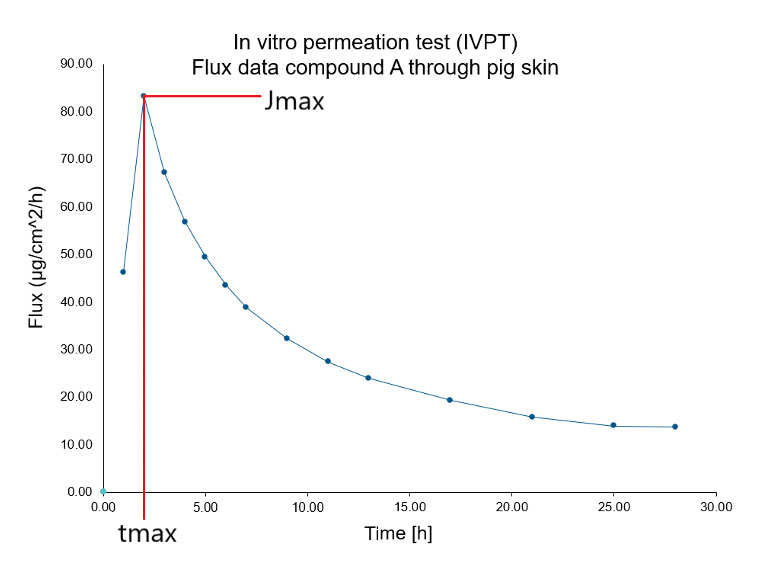


- Skin penetration model using viable pig ear skin. Excellent correlation with human skin demonstrated
- Allows determination of cutaneous biodistribution of topically applied drugs
- Penetration profile into different skin layers. Direct determination of actives concentration at the site of action possible.
- Cost effective and without ethical implications
- In cooperation with university hospital Hamburg Eppendorf (UKE). Analytical method development, sample preparation and analysis at RaDes
- Viable model which allows determination of metabolism of actives in the skin
- See: Herbig ME, Houdek P, Gorissen S, Brandner J et al. A custom-tailored model to investigate skin penetration in porcine skin and its correlation with human skin. Eur J Pharm Biopharm, (95) 99-109, 2015


- Screening tool for dermal permeation potential
- 96-well plate format using a porous lipid-impregnated filter to mimic the stratum corneum as the main barrier for dermal absorption
- Allows comparison of topical and transdermal formulations to support ranking & selection
- RaDes investigations contributed to the understanding of the potential and limits of the model. See: Köllmer M et al. Investigation of the Compatibility of the Skin PAMPA Model with Topical Formulation and Acceptor Media Additives Using Different Assay Setups. AAPS PharmSciTech, 20(89), 2019.
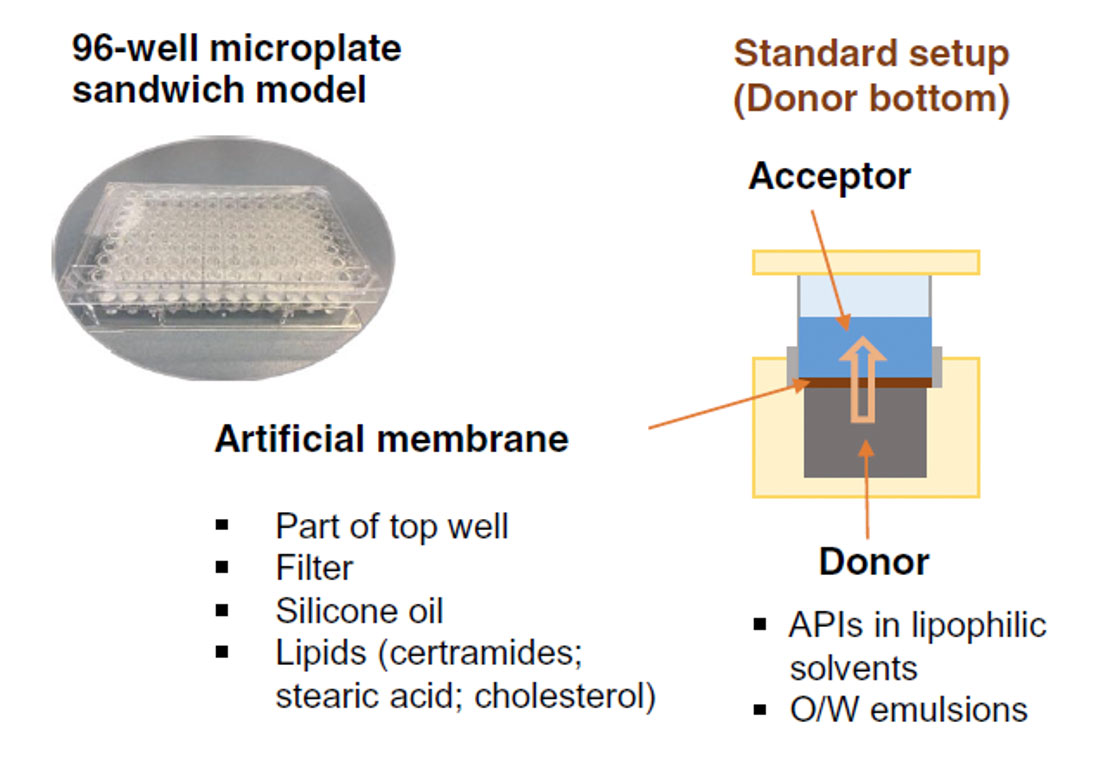

The nail is a barrier fundamentally different to the skin and requires different formulation approaches and penetration models
- Inhouse developed model using human nail clippings to determine the API amount penetrated into the nail plate
- As nail swelling facilitates penetration, formulations can also be characterized with regards to their nail swelling capacity


Sascha Gorissen
+49 151 12986843
sascha.gorissen@rades-development.com

Dr. Petra Lohmann
Since January 2020, Dr. Lohmann is head of quality assurance of RaDes GmbH. She studied chemistry as well as pharmaceutical sciences at the University of Münster and received her PhD in pharmaceutical chemistry. After working in analytics and quality control at Wyeth Pharma GmbH and Haupt Pharma GmbH, she joined Hermal GmbH in 2000, where she was head of quality control. In the R&D department she was qualified person (QP) as of 2005 and from 2013 to 2016 head of quality assurance. From 2016 to 2019 she was head of quality assurance at Bode Chemie GmbH (Hartmann Group), where she managed a portfolio of medical devices, pharmaceuticals, biocides and cosmetics.
As a result of these activities, she is thoroughly familiar with industry-relevant quality standards and regulations such as GMP, GCP, GLP, lSO 9001, ISO 13485, ISO 14001, AMG, AMWHV, 21 CFR 210/211, MDR and the requirements of pharmacopoeias, as well as with the evaluation and approval of qualifications and validations, the quality module of IMPDs and registration dossiers and the certification of clinical investigational medicinal products. Furthermore, she has extensive experience in planning and conducting internal and external audits and in designing delimitations of responsibilities in transfer and collaboration projects.
At RaDes, Dr. Lohmann is responsible for the establishment and maintenance of a quality management system as well as the quality standards for studies under GxP. She supports customer projects with strategies and expertise in quality and compliance aspects. In addition, she offers consulting and expert opinions in the field of quality management, e.g. GMP trainings, support in the preparation of inspections and advice on the establishment and optimization of quality management systems.
 PETRA LOHMANN

Sascha Gorissen
Sascha Gorissen heads the project management of RaDes GmbH and is responsible for the operation of the labs. In addition, he is in charge of the in vitro/ex vivo release and percutaneous absorption models implemented at RaDes. He studied biotechnology engineering at the University of Applied Sciences in Gießen, Germany and began his professional career as a research scientist in the preclinical development department of Schwarz Pharma AG in Monheim, Germany. His work in the departments of Molecular Biology and ADME focused on the establishment and implementation of molecular biological and cell biological methods. Furthermore, he was responsible for the development, validation and implementation of bioanalytical methods in the GLP area.
Subsequently, as a research scientist in analytics at AMDS, he was responsible for the expansion of the analytical method spectrum and organization of the laboratory. In addition, he established a preparative HPLC method for the purification of chiral substances. In 2009, he moved to Almirall Hermal. In the Analytics and Quality Control group, he was initially responsible for the development and validation of analytical methods for semi-solid drugs under GMP, the implementation of new analytical technologies such as mass spectrometry, the determination of structural information on unknown degradation products and the qualification of computerized systems. He also took over the CMC lead of various international development projects from feasibility to clinical phase III. From 2016 until the founding of RaDes GmbH, he was group leader of “Analytics and Quality Control Pharmaceutical Development” at the Reinbek site.
 SASCHA GORISSEN